The webflow vs lovable b2b decision becomes easier when you separate marketing websites from software products. These tools are built for different jobs.
Webflow is the strongest choice for B2B companies that rely on SEO, content marketing, CRM integrations, and marketing team independence.
Framer works well for design-focused websites and landing pages, but its CMS capabilities are more limited for content-heavy businesses.
Lovable is ideal for MVPs, customer portals, and web applications, not for managing blogs, case studies, or large-scale marketing operations.
v0 is best suited for developer teams building custom React interfaces and internal tools rather than running marketing websites.
The webflow vs framer SEO debate is less about rankings and more about content infrastructure, internal linking, and long-term scalability.
Many successful B2B companies use a hybrid approach, with Webflow or Framer for marketing and Lovable or v0 for product experiences.
Total cost of ownership includes more than subscription fees. Developer time, maintenance, integrations, and technical debt often have a bigger impact on long-term costs.
If your website needs to rank, scale content, integrate with your CRM, and operate without constant engineering support, Webflow is usually the most practical choice.
Choosing the wrong website platform rarely feels like a mistake at first. The problems show up months later when your marketing team is blocked from publishing content, SEO growth stalls because your site structure cannot scale, and simple updates require developer time you do not have. Many B2B teams end up rebuilding their site within a year because the tool they picked could not support how they actually operate.
Webflow, Framer, Lovable, and v0 are often compared as direct competitors, but they solve completely different problems and are built for different teams. This guide breaks down where each tool fits, how they impact SEO, content operations, marketing workflows, and long-term costs, and which option makes the most sense for your business goals.
The Real Decision: Are You Building a Website or a Web Application?
Webflow and Framer are visual website platforms, while Lovable and v0 are AI-powered code generation tools. The right choice depends less on features and more on whether your business needs a marketing engine or a software product. That distinction matters more than any comparison between Webflow vs Lovable or Framer vs Webflow because these tools are designed to solve different problems.
Many B2B teams evaluate all four platforms as if they belong in the same category. In reality, some are built to help marketers publish content, launch campaigns, and drive organic growth, while others focus on helping developers build applications, internal tools, and product experiences. Understanding this difference makes the webflow vs framer vs lovable decision much simpler.
1. Visual Website Builders: Webflow and Framer
Webflow and Framer are best for businesses that need a website that supports marketing, content, and lead generation. Both platforms give teams visual control over design and publishing without requiring day-to-day developer involvement.
These tools are well suited for:
Marketing websites
Content-driven blogs
SEO and organic growth initiatives
Campaign and landing pages
Lead generation and conversion funnels
Webflow stands out for content-heavy B2B websites because of its CMS flexibility, SEO controls, and integration ecosystem. Framer excels at building visually polished websites and high-converting landing pages, but it is less suited to large content operations or complex marketing workflows.
2. AI Code Generators: Lovable and v0
Lovable and v0 are best for building software products rather than managing marketing websites. They use AI to generate code and help teams move quickly when creating applications, prototypes, and internal systems.
These tools are a strong fit for:
SaaS products
Internal business tools
MVP development
Authentication systems
Database-driven applications
Lovable is designed for teams that want to build full-stack applications with features like user accounts and backend functionality. v0 is aimed at developers working within the Vercel ecosystem and generating React interfaces. Neither platform includes the content management, SEO, or marketing capabilities that most B2B companies need from their primary website.
Quick Comparison: Webflow vs Framer vs Lovable vs v0
The biggest difference between these platforms is the problem they are designed to solve. Webflow is built for marketing and content operations, Framer focuses on design and landing pages, and Lovable and v0 help teams build applications with AI-assisted development. If you are evaluating webflow vs lovable b2b use cases, understanding this distinction will save significant time and migration costs later.
Platform
Best For
Biggest Strength
Biggest Limitation
Webflow
B2B marketing websites
CMS, SEO, and marketing operations
Higher learning curve
Framer
Landing pages
Speed and animations
Limited CMS capabilities
Lovable
MVPs and web applications
Fast AI-assisted development
Weak marketing workflows
v0
Developer-led projects
React UI generation
Requires engineering resources
Webflow
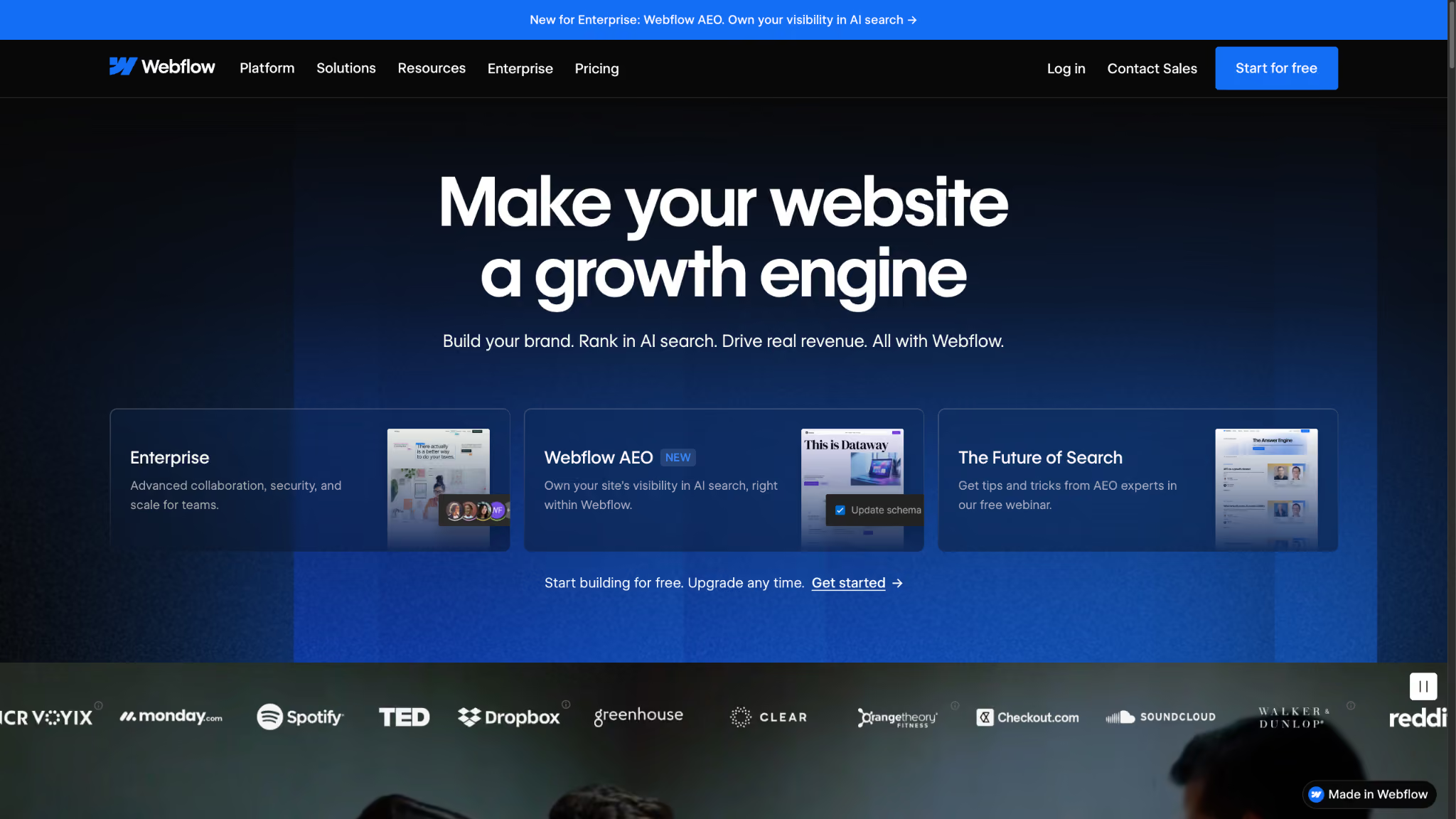
Webflow is best for B2B companies that rely on content, SEO, and lead generation. It combines a powerful CMS, strong SEO controls, and native integrations that allow marketing teams to operate without constant developer support.
Framer
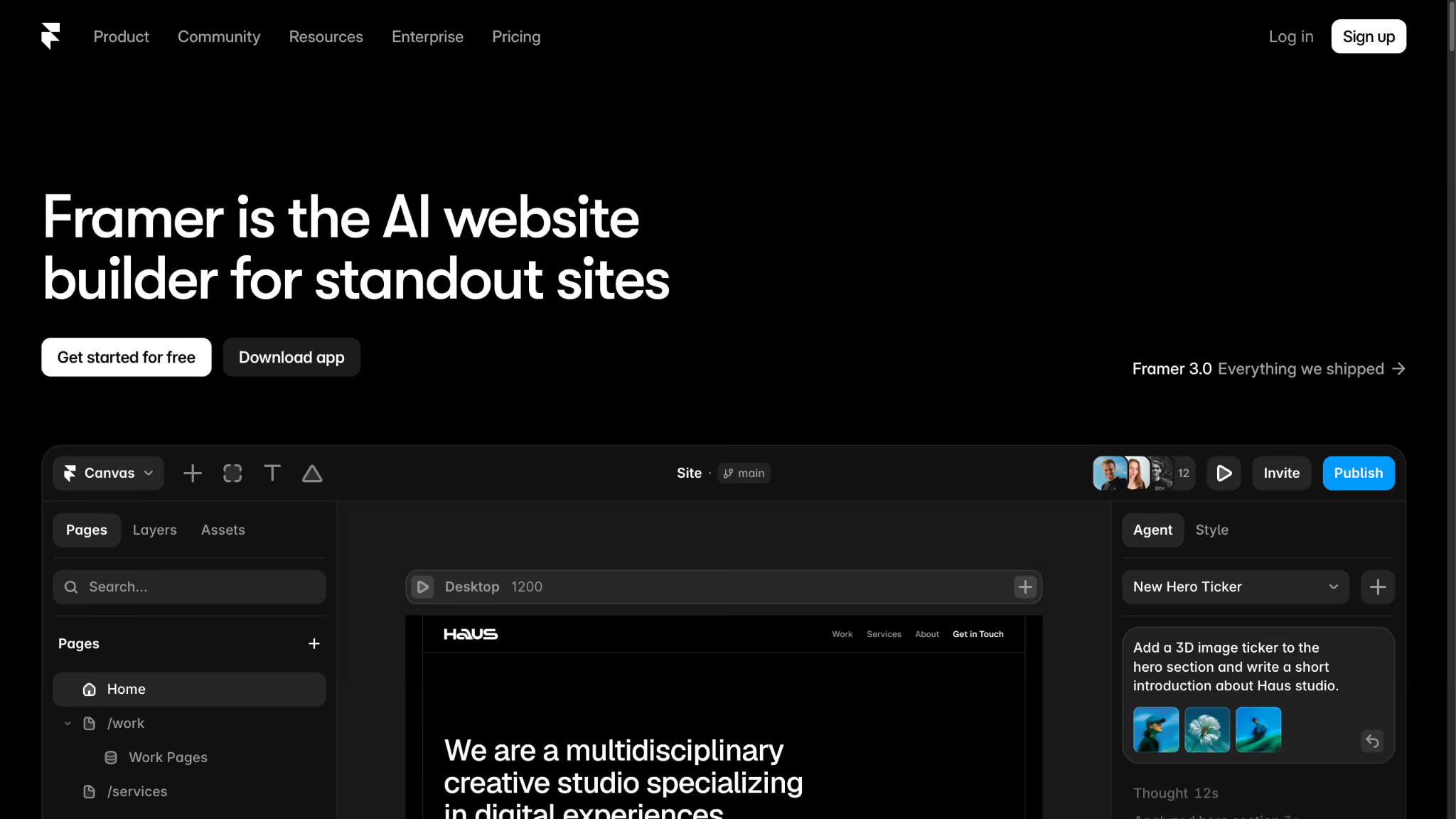
Framer is best for visually polished websites and campaign landing pages. It offers excellent performance and design flexibility, but its CMS capabilities are more limited for teams planning to scale content marketing over time.
Lovable
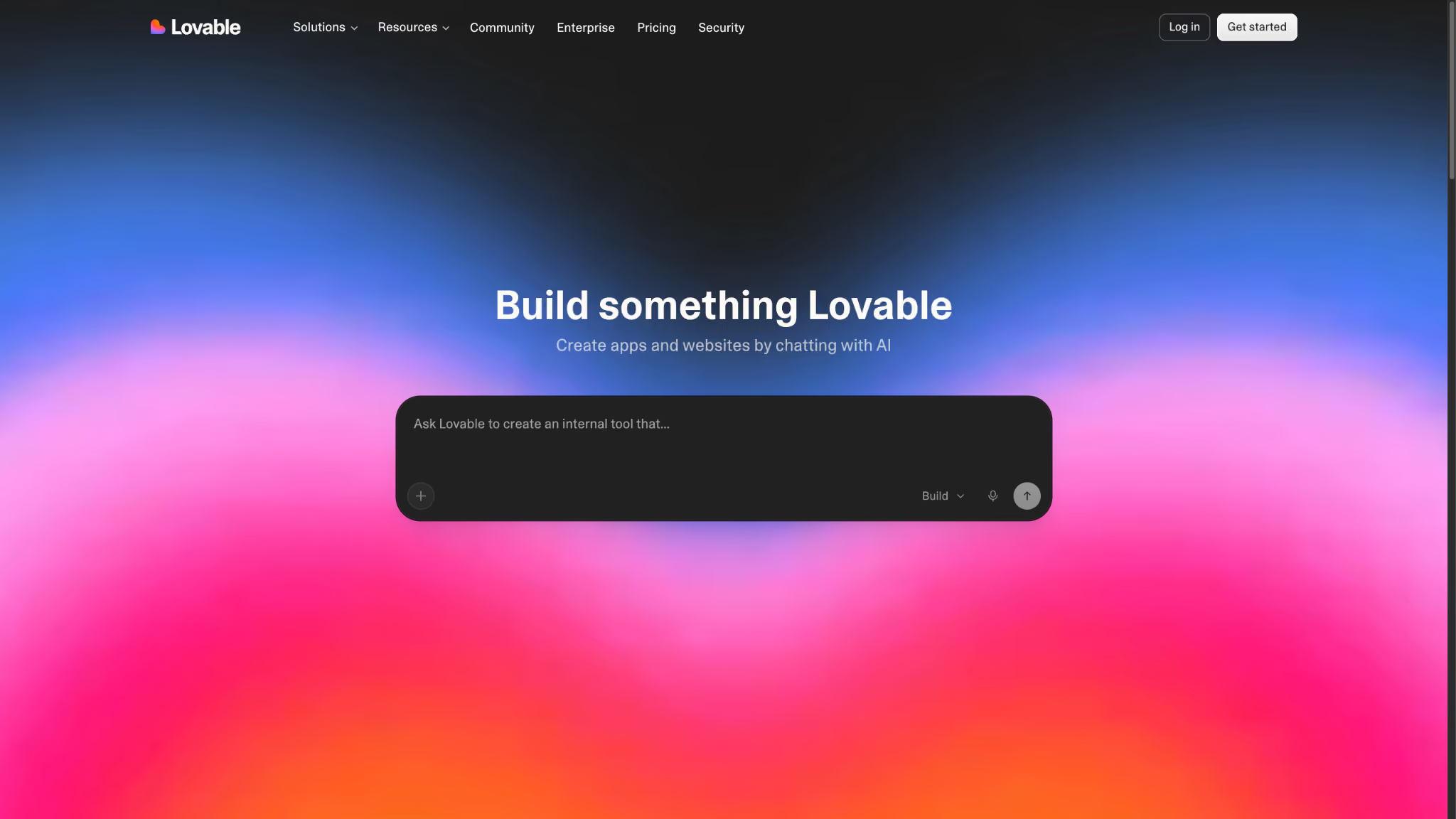
Lovable is best for startups building MVPs, internal products, and customer-facing applications. While the platform accelerates development, it lacks the content management and marketing features that most businesses need from their primary website.
V0
v0 is best for engineering teams working within the React and Vercel ecosystem. It helps developers generate interfaces quickly, but it is not a standalone solution for content-heavy marketing websites or day-to-day marketing operations.
The webflow vs framer vs lovable debate becomes much clearer when you compare business goals instead of features. Companies focused on SEO, content, and demand generation need a different platform than teams building software products or internal tools.
What Your B2B Website Actually Needs to Do
The best platform depends on what your website is responsible for. Most B2B websites are not digital brochures. They are revenue systems that attract prospects, build trust, capture leads, and support the entire buyer journey. That is why the webflow vs lovable b2b conversation should focus on business outcomes rather than feature lists.
A good-looking website is no longer enough. Your platform needs to help your team publish content, connect with marketing tools, launch campaigns quickly, and support long-term growth without creating engineering bottlenecks. Before choosing between Webflow, Framer, Lovable, or v0, it helps to understand the jobs your website needs to perform.
Job 1: Turn Traffic Into Demo Requests
Your website should convert visitors into qualified pipeline. That means having the tools to build high-converting landing pages, create effective forms, and connect every lead to your sales process.
Strong B2B websites typically include:
Dedicated campaign landing pages
Integrated forms and lead capture workflows
CRM connections for sales follow-up
Clear conversion paths and CTAs
A testing framework for ongoing CRO improvements
Webflow and Framer both support landing page creation, but Webflow offers deeper integration options for businesses that rely heavily on marketing automation and lead management.
Job 2: Publish Content Without Engineering Bottlenecks
Marketing teams should be able to publish content without waiting for developers. This is where CMS capabilities become one of the biggest differentiators between platforms.
A scalable B2B website usually includes:
Blogs and thought leadership content
Resource libraries
Customer case studies
Comparison pages
Industry landing pages
Webflow is particularly strong for content operations because its CMS supports structured content at scale. Platforms like Lovable and v0 are designed for applications, not content publishing, which creates unnecessary friction for marketing teams.
Job 3: Connect With Your Marketing Stack
Your website should work seamlessly with the tools your business already uses. Manual workarounds and custom development slow down campaigns and create operational headaches.
Most B2B companies need integrations with:
HubSpot
Salesforce
Zapier
Marketo
Google Analytics 4
Webflow offers native integrations and a mature ecosystem for marketing operations. AI development tools often require custom implementation, which increases both costs and maintenance effort over time.
Job 4: Change Messaging Fast When Markets Shift
Your positioning, ICP, and campaigns will evolve as your business grows. The right platform should make updates simple rather than creating dependency on engineering resources.
Marketing teams frequently need to:
Launch new campaigns
Update value propositions
Test different offers
Create industry-specific pages
Refresh content based on customer feedback
Visual website platforms give marketers more control over these changes. That speed becomes a competitive advantage when markets move quickly or new opportunities emerge.
Job 5: Support SEO Growth Over Time
Long-term organic growth depends on more than fast page loads. Content structure, CMS flexibility, and technical SEO controls all influence how well a website scales.
The webflow vs framer SEO discussion often focuses on performance, but the bigger difference is content management. Webflow provides stronger support for large blogs, resource centers, internal linking strategies, and structured content systems that help B2B companies grow organic traffic over time.
If SEO is part of your acquisition strategy, the platform you choose today will shape how easily you can publish, optimize, and expand content in the years ahead.
Webflow vs Framer vs Lovable vs v0: Head-to-Head for B2B Teams
Webflow is the strongest option for most B2B marketing websites because it combines content management, SEO controls, and marketing integrations in a single platform. Framer works well for design-focused websites, while Lovable and v0 are better suited for building products and applications. If you are comparing webflow vs lovable b2b use cases, the differences become much clearer when you look at day-to-day business operations instead of individual features.
Category
Webflow
Framer
Lovable
v0
CMS
Advanced CMS for blogs, resources, and case studies
Basic CMS for smaller websites
No built-in CMS
No built-in CMS
Blog scaling
Excellent for content-heavy B2B websites
Moderate, suitable for smaller content libraries
Poor, requires custom solutions
Poor, requires custom solutions
SEO controls
Full control over metadata, redirects, and schema
Good technical SEO features with some limitations
Weak without additional setup
Developer-dependent SEO implementation
CRM integrations
Native integrations with HubSpot, Salesforce, and Zapier
Basic third-party integrations
Custom integrations required
Custom integrations required
Marketing team editing
Complete visual editing without developers
Suitable for simple marketing updates
No marketer-friendly editing experience
Requires engineering support
Core Web Vitals
Strong performance out of the box
Strong performance and lightweight pages
Depends on code quality and deployment
Strong when properly implemented
Lock-in risk
Medium, tied to the Webflow ecosystem
Medium, tied to the Framer ecosystem
Low because code can be exported
Low because teams own the codebase
Developer dependency
Low for day-to-day operations
Low for most website updates
High for maintenance and scaling
Very high for non-technical teams
Total cost at scale
Predictable subscription and maintenance costs
Predictable for smaller marketing teams
Variable due to developer requirements
Highly dependent on engineering resources
1. CMS and Content Operations
Webflow offers the strongest CMS capabilities for B2B companies that publish blogs, case studies, comparison pages, and resource hubs. Framer supports basic content management, but it becomes harder to scale as content volumes grow. Lovable and v0 do not provide built-in CMS functionality, which means teams need custom solutions for content publishing.
2. SEO Controls and Organic Growth
Webflow provides complete control over metadata, structured content, redirects, and technical SEO settings. Framer performs well from a technical standpoint, but its content infrastructure is more limited for businesses investing heavily in organic acquisition. The webflow vs framer SEO debate is often less about page speed and more about how easily teams can scale content over time.
3. Marketing Team Independence
Marketing teams work faster when they can make updates without engineering support. Webflow and Framer both offer visual editing experiences, although Webflow includes stronger permissions, workflows, and CMS controls for larger teams. Lovable and v0 require technical involvement for most changes, which can slow down campaign launches and content updates.
4. Integrations and Business Operations
Most B2B companies rely on tools like HubSpot, Salesforce, Zapier, and Google Analytics 4 to manage their marketing efforts. Webflow includes a mature ecosystem of integrations, while Framer offers more basic connectivity options. Lovable and v0 typically require custom development work, which adds complexity as businesses scale.
5. Long-Term Costs and Flexibility
Subscription costs tell only part of the story. Developer time, maintenance work, and operational complexity often become the biggest expenses over time. Webflow and Framer offer predictable costs for marketing teams, while AI development platforms can introduce additional engineering requirements that are difficult to estimate upfront.
The webflow vs framer vs lovable discussion should ultimately focus on who owns the website after launch. If marketers need to publish content, run campaigns, and support SEO growth independently, the right platform looks very different from the tools used to build software products.
Webflow vs Framer for SEO and Content Marketing
Webflow and Framer can both rank well on Google, but Webflow offers a significantly stronger CMS and content infrastructure for B2B companies publishing blogs, resources, case studies, and landing pages at scale. The webflow vs framer SEO debate is less about whether both platforms can rank and more about which one can support long-term content growth without adding operational complexity.
If your website is a major acquisition channel, content management and publishing workflows matter just as much as page speed or design flexibility.
1. CMS Depth
Webflow provides a more advanced CMS for businesses that produce large amounts of content. Teams can create custom collections, reference fields, dynamic templates, and structured content types that support growth over time.
Framer includes a simpler CMS that works well for smaller websites and campaign pages. However, managing hundreds of blog posts, case studies, and resource pages becomes more challenging as content operations expand.
For B2B companies, a strong CMS enables:
Faster content publishing
Better content organization
Easier updates across multiple pages
Greater flexibility for future campaigns
2. Structured Content
Structured content helps businesses create repeatable page templates and maintain consistency across their website. This becomes increasingly important as marketing teams build resource libraries, industry pages, and comparison content.
Webflow allows teams to build structured systems for:
Blog articles
Customer case studies
Resource hubs
Landing pages
Industry-specific solutions pages
Framer supports basic dynamic content, but it does not offer the same level of flexibility for large content ecosystems.
3. Internal Linking
Internal linking plays a major role in SEO because it helps search engines understand relationships between pages and distribute authority across a website.
Webflow makes it easier to build internal linking strategies at scale through its CMS collections and dynamic templates. Marketing teams can create content hubs, related article sections, and comparison pages without relying on custom development.
This flexibility is particularly valuable for B2B companies investing in long-term organic growth and topical authority.
4. Localization
Localization becomes important when businesses target multiple regions, industries, or languages. A scalable platform should make it easy to manage different versions of content while maintaining a consistent user experience.
Webflow includes localization features that help teams manage multilingual websites and region-specific content from a central system. Framer offers localization capabilities as well, but larger content operations may require additional workflows and management effort.
5. AEO Readiness
Answer Engine Optimization depends on clear content structures, logical headings, and easily accessible information. The platforms that support structured content tend to perform better as AI search experiences continue to evolve.
Webflow gives marketing teams greater control over:
Content hierarchy
Metadata and schema
Internal linking systems
Resource centers
Comparison pages
Framer can still support AEO best practices, but its lighter CMS makes large-scale content strategies more difficult to manage. For companies comparing webflow vs framer vs lovable, this distinction matters because AI visibility increasingly depends on content depth and organizational structure rather than design alone.
Why Lovable and v0 Are Poor Foundations for Marketing Websites
Lovable and v0 are excellent tools for building applications, but they are not designed to run modern B2B marketing websites. If your growth strategy depends on SEO, content marketing, lead generation, and fast campaign execution, the webflow vs lovable b2b decision becomes much simpler. Marketing teams need systems they can operate independently, not products that create more engineering work over time.
The challenge is not that these tools are technically limited. The challenge is that they solve a completely different problem. Lovable and v0 help teams build software, while marketing websites need content management, integrations, publishing workflows, and long-term SEO infrastructure.
1. No Visual CMS
A visual CMS allows marketing teams to create, edit, and publish content without touching code. This is essential for businesses that regularly update blogs, case studies, landing pages, and resource centers.
Neither Lovable nor v0 includes a built-in visual CMS for marketing operations. Teams often need to connect third-party systems or build custom solutions, which adds complexity and slows down everyday work.
Without a dedicated CMS, common marketing tasks become harder:
Publishing new blog posts
Updating case studies
Managing resource libraries
Creating comparison pages
Launching campaign landing pages
2. Engineering Dependency
Marketing websites work best when marketers can manage them independently. Lovable and v0 increase engineering dependency because most changes require technical knowledge or developer involvement.
This creates challenges when teams need to:
Launch a new campaign quickly
Update messaging for a different audience
Add conversion forms
Test new landing pages
Connect additional marketing tools
In contrast, visual website platforms allow non-technical teams to move faster and reduce operational bottlenecks.
3. SEO Challenges
Lovable and v0 can support SEO, but they require additional implementation and ongoing technical management. Strong SEO performance depends on much more than page speed or clean code.
Marketing teams need control over:
Metadata and page titles
Redirect management
Structured content
Internal linking
Schema markup
The webflow vs framer vs lovable conversation often overlooks this point. A platform that requires developer support for every SEO update makes long-term organic growth harder to sustain.
4. Content Publishing Problems
Content marketing relies on consistency and speed. Businesses that publish blogs, comparison pages, case studies, and resources need efficient publishing workflows.
Lovable and v0 are not designed for content operations at scale. Teams may struggle with:
Managing large content libraries
Maintaining consistent page structures
Building topic clusters
Updating existing content
Creating reusable templates
These limitations become more obvious as marketing efforts grow and publishing requirements increase.
5. Ownership Tradeoffs
Code ownership is one of the biggest advantages of AI development tools, but it comes with additional responsibilities. While Lovable and v0 reduce platform lock-in, businesses also become responsible for maintenance, hosting, updates, and technical support.
That tradeoff makes sense for software products and internal tools. It is less attractive for marketing websites that need to support demand generation and content growth.
For most B2B companies, the goal is not to own more code. The goal is to give marketing teams the freedom to publish, optimize, and scale without depending on engineers for every change.
What These Platforms Actually Cost Over 12 Months
The cheapest website platform is not always the most affordable option in the long run. Subscription fees are easy to compare, but maintenance, developer time, integrations, and content operations often have a much bigger impact on total cost. When evaluating webflow vs lovable b2b solutions, businesses should look at the full cost of ownership rather than the monthly price alone.
The estimates below reflect typical costs for growing B2B companies. Actual costs will vary based on website size, content requirements, and the level of custom functionality needed.
Scenario
Estimated Annual Cost
Webflow CMS + agency support
$3,000–$15,000+
Framer Pro + CMS
$600–$5,000+
Lovable Pro + hosting + developer support
$6,000–$25,000+
v0 + Vercel + engineering resources
$10,000–$50,000+
Webflow and Framer have more predictable costs because marketing teams can manage content and campaigns without relying heavily on developers. Lovable and v0 may have lower software costs, but engineering time can quickly become the biggest expense as websites evolve.
Hidden Costs Nobody Mentions
The monthly subscription is only one part of the equation. The real cost of a platform often comes from the work required to maintain and operate it over time.
Maintenance Costs
Every website needs ongoing updates, bug fixes, and performance improvements. Visual website platforms reduce maintenance because hosting, infrastructure, and platform updates are managed for you.
AI-generated applications require more hands-on support. Teams may need developers to maintain codebases, update dependencies, and troubleshoot issues as the product evolves.
Integration Costs
Modern B2B websites depend on tools like HubSpot, Salesforce, Zapier, and Google Analytics 4. Native integrations save time and reduce complexity.
Platforms that require custom integrations often create additional costs through:
Developer implementation
Ongoing maintenance
API updates
Testing and troubleshooting
These expenses are easy to overlook during the initial evaluation process.
Technical Debt
Technical debt happens when quick solutions create bigger problems later. This is a common challenge with custom-built marketing websites that were never designed for long-term content operations.
The webflow vs framer vs lovable comparison should include technical debt as a factor. Marketing teams that rely on developers for every update often accumulate systems that become harder and more expensive to maintain over time.
Onboarding and Team Adoption
A platform only creates value if your team can use it effectively. Marketing teams generally adapt faster to visual tools because publishing workflows are straightforward and require little technical knowledge.
Onboarding challenges can include:
Training non-technical team members
Creating content governance processes
Building integration workflows
Documenting custom implementations
For most B2B companies, reducing operational complexity delivers more value than minimizing subscription costs. The right platform is the one that helps your team move faster while keeping long-term expenses predictable.
The Hybrid Stack Most B2B Companies End Up Using
The best setup for most B2B companies is to use Webflow or Framer for marketing and Lovable or v0 for product experiences. These tools solve different problems, and treating them as direct replacements often leads to unnecessary compromises. The webflow vs lovable b2b conversation becomes much easier when you separate your marketing website from your product infrastructure.
Your website needs to attract traffic, generate leads, and support content marketing. Your product needs authentication, databases, workflows, and custom functionality. Trying to force one tool to do both jobs rarely works well in the long run.
Marketing Website: Webflow
Webflow is the preferred choice for companies that rely on SEO, content marketing, and lead generation. It gives marketing teams complete control over blogs, landing pages, case studies, and campaign pages without creating engineering bottlenecks.
Webflow works particularly well for:
B2B marketing websites
Content hubs and resource centers
Organic growth strategies
Multi-page campaigns
CRM and marketing automation integrations
Customer Portal or Product Experience: Lovable
Lovable is better suited for customer-facing applications and product experiences that require authentication, databases, and backend functionality. It allows teams to move quickly when building MVPs or validating new ideas.
Common use cases include:
Customer portals
SaaS products
Membership platforms
Internal dashboards
Database-driven applications
This is why many teams comparing webflow vs framer vs lovable ultimately choose both rather than forcing a single platform to handle every requirement.
Internal Tools and Custom Workflows: v0
v0 works best for engineering teams building internal tools and custom interfaces. Its ability to generate React components makes it valuable for businesses already operating within the Vercel ecosystem.
Typical use cases include:
Internal business tools
Admin dashboards
Custom workflows
Rapid UI prototyping
Developer-led applications
The Right Tool for the Right Job
The strongest B2B websites separate marketing operations from product development. Marketing teams need publishing workflows, SEO controls, and CRM integrations, while product teams need flexibility, authentication systems, and custom logic.
A common modern stack looks like this:
Business Function
Recommended Platform
Marketing website
Webflow
Customer portal
Lovable
Internal tooling
v0
Design-first campaign pages
Framer
Using a hybrid approach allows each team to work with the tools that fit their goals. Instead of asking which platform does everything, the better question is which platform does each job best.
4 Questions That Tell You Which Platform to Choose
The right platform depends on how your business plans to grow and who will manage the website after launch. Most companies comparing webflow vs lovable b2b solutions do not need a single tool that does everything. They need the right tool for the specific job their team is trying to accomplish.
If you answer the four questions below, the decision becomes much clearer.
1. Do Marketers Need to Publish Content Without Developers?
If the answer is yes, choose Webflow.
Marketing teams need the ability to publish blogs, update landing pages, launch campaigns, and edit content without waiting for engineering resources. Webflow provides a visual CMS and editing experience that allows marketers to work independently while maintaining design consistency.
This is especially important for businesses investing in:
Content marketing
SEO
Lead generation campaigns
Resource centers
Case studies and comparison pages
2. Is SEO a Major Acquisition Channel?
If the answer is yes, choose Webflow.
Organic growth depends on strong content infrastructure, internal linking, and technical SEO controls. The webflow vs framer SEO discussion often comes down to scalability. Both platforms can rank well, but Webflow offers a more robust system for businesses publishing content at scale.
If SEO drives demos and pipeline, your platform should support:
Structured content
Metadata management
Redirects
Content hubs
Long-term publishing workflows
3. Are You Building Software Rather Than a Website?
If the answer is yes, choose Lovable or v0.
Software products require authentication, databases, custom logic, and application workflows. Lovable and v0 are designed for these use cases, which makes them better options for MVPs, customer portals, and internal applications.
They work well for:
SaaS products
Customer dashboards
Internal tools
AI-powered applications
Developer-led projects
4. Is Design Experimentation Your Highest Priority?
If the answer is yes, choose Framer.
Framer is ideal for teams that value visual design, motion, and rapid experimentation. It makes it easy to build polished landing pages and marketing experiences with minimal development effort.
Framer is a strong choice for:
Campaign landing pages
Design-first brands
Startup launch websites
Portfolio websites
Smaller content sites
Decision Matrix
If you still are not sure which platform fits your needs, use the table below as a quick reference guide.
Situation
Best Platform
B2B SaaS website
Webflow
Content marketing engine
Webflow
Landing pages
Framer
MVP
Lovable
Internal tools
v0
Developer teams
v0
The webflow vs framer vs lovable debate becomes much simpler when you focus on business goals instead of features. Marketing websites need content systems and SEO infrastructure, while software products need flexibility and custom functionality. Choosing the platform that aligns with those goals will save time, money, and technical headaches as your business scales.
Final Thoughts
Lovable is impressive. v0 is powerful. Framer is one of the best tools available for creating visually polished websites. The challenge is that none of these platforms solve the same problem, which is why the webflow vs lovable b2b debate often creates more confusion than clarity.
If your website needs to:
Rank on search engines and grow organic traffic
Scale content production over time
Integrate with HubSpot, Salesforce, or other marketing tools
Support blogs, case studies, and resource centers
Operate without constant developer involvement
then the right choice becomes much clearer.
Marketing websites are long-term business assets. They need to evolve as your positioning changes, your content library grows, and your go-to-market strategy matures. A platform that looks great on launch day but creates operational bottlenecks six months later will cost far more than its monthly subscription fee.
For most B2B companies, Webflow offers the strongest combination of SEO capabilities, content infrastructure, marketing integrations, and team independence. The webflow vs framer vs lovable decision is not about finding one tool that does everything. It is about choosing the right system for the job your website needs to perform.
Building a marketing site that your team can actually run is very different from launching a beautiful homepage. Ready to turn your website into a growth engine? Amply helps B2B teams build scalable Webflow systems for content, SEO, and long-term performance so you can move faster without relying on developers.
Get your Webflow SEO Google sheet checklist
Short description on the benefits or value you’ll get from using this checklist
Organizes SEO tasks for efficiency
Simplifies keyword tracking and management
Ensures consistent on-page optimization efforts
Thank you! Your submission has been received!
Oops! Something went wrong while submitting the form.
Frequently Asked questions
Is Webflow better than Framer for B2B websites?
Is Lovable good for SEO?
Can you build a marketing website with v0?
What is the best no-code website builder for B2B companies?
Should startups use Framer or Webflow?
Can I use Webflow for marketing and Lovable for my product?
Which platform is best for content marketing: Webflow, Framer, Lovable, or v0?
Do I need developers to manage a Webflow website?
About the Author
Rajat Kapoor
Copywriter, marketer, and Webflow developer. Rajat focuses on crafting clear, SEO-focused copy for scaling B2B brands.
CRO is the practice of increasing the share of visitors who take a key action. Here is how conversion rate optimization works for B2B websites in Webflow.
See what Webflow agencies cost in 2026, with real pricing from 12 firms, typical B2B project ranges, what each tier includes, and how to compare proposals.
See what Webflow MCP and Claude can actually do for marketing teams, from CMS updates and SEO audits to content workflows, approvals, and practical automation.
Rajat Kapoor
10
min
Our Portfolio
Explore Our Resource Collections
Amply Academy
Learn Web design, webflow, and web design best practices, all tailored to help you grow your B2B business



.avif)


.avif)