Structured navigation and industry-based pathways reduce confusion for engineers and procurement teams.
Visible proof: certifications, facilities, case studies, and production capabilities builds trust faster than marketing claims.
Integrated RFQ or quoting systems reduce friction and signal operational maturity.
In 2026, the most effective manufacturing websites function as credibility and qualification tools, not digital brochures.
Most manufacturing websites do not look terrible.
They look forgettable.
Stock photography of factory floors. Dense technical copy with no hierarchy. Navigation structured around internal departments instead of buyer intent. A homepage that explains the company’s history but not why it should be chosen.
In 2026, that costs real opportunities.
Buyers are not discovering manufacturers at trade shows first anymore. They are researching suppliers online long before speaking to sales. Procurement teams compare capabilities quietly. Engineers scan for certifications, tolerances, materials, and production depth. Decision-makers look for proof and clarity within seconds.
If your website feels outdated, unclear, or overly technical without structure, you are not just losing attention. You are losing positioning.
The strongest manufacturing websites today do something different. They simplify complex capabilities without stripping away technical depth. They clarify who they serve, what they specialize in, and how they reduce risk. They guide engineers and procurement teams toward confidence, not confusion.
And when manufacturing brands treat their website as a qualification and credibility tool rather than a digital brochure, performance changes. That is exactly the mindset we outline in our manufacturing web design approach, where structure, proof, and RFQ clarity come first.
In this list, we break down the best manufacturing website examples in 2026 and more importantly, what actually makes them work.
What Makes a Manufacturing Website Great?
A modern logo and darker color palette won’t fix a weak manufacturing website.
Because the real issue usually isn’t design. It’s clarity.
If buyers land on your site and can’t immediately understand what you manufacture, who you serve, and why you’re different, they won’t dig deeper, they’ll compare you on price or move on entirely.
The best manufacturing websites in 2026 don’t try to impress. They reduce uncertainty. They make complex operations feel structured, credible, and easy to evaluate.
Strong manufacturing sites follow many of the same foundational principles seen across high-performing B2B websites. We break those down in detail in our guide on what makes a good website design from hierarchy and messaging clarity to conversion structure.
Here’s what great manufacturing websites consistently get right:
1. Clear Positioning in the First 5 Seconds
Visitors shouldn’t have to decode your capabilities.
Strong manufacturing websites clearly state:
What you manufacture
Who it’s for
Your core differentiator
Not “Precision. Quality. Innovation.”
But specific, buyer-focused messaging that eliminates confusion immediately.
2. Complex Capabilities Made Understandable
Manufacturing is technical but your messaging doesn’t have to be overwhelming.
Great sites break down:
Services
Processes
Industries served
Certifications
They use structured layouts, visual hierarchy, and plain language to guide engineers and procurement teams without drowning them in jargon.
3. Proof That Reduces Risk
Manufacturing buyers are risk-averse.
The strongest websites prominently showcase:
Certifications and compliance standards
Case studies
Facility imagery
Production capabilities
Client logos (when possible)
Trust signals aren’t hidden in the footer, they’re integrated into the experience.
4. Strong Information Architecture
Industrial websites often suffer from “menu overload.”
The best examples simplify navigation:
Clear service categories
Logical grouping of capabilities
Easy access to contact or RFQ pages
Minimal friction to speak to sales
Clarity beats complexity every time.
5. Conversion Paths That Feel Natural
A great manufacturing website doesn’t scream “Contact Us.”
It strategically guides visitors toward:
Requesting a quote
Downloading a capability deck
Scheduling a consultation
Speaking with an engineer
The path forward is obvious but not aggressive.
6. Modern, Purposeful Visual Design
This isn’t about flashy animations.
It’s about:
Clean layouts
High-quality facility photography
Strong typography
Visual consistency
Mobile usability
Modern design signals operational maturity. And in manufacturing, perception of precision matters.
When these elements come together, a manufacturing website stops being a digital brochure and starts becoming a positioning tool.
Best Manufacturing Websites in 2026
A great manufacturing website isn’t defined by how modern it looks but by how clearly it communicates complexity.
The companies below don’t just showcase machinery, facilities, or certifications. They structure information around how buyers actually evaluate suppliers: capabilities, speed, reliability, and risk reduction. Each example demonstrates a different way to make industrial depth feel accessible without oversimplifying it.
Let’s start with one of the strongest digital-first manufacturing platforms.
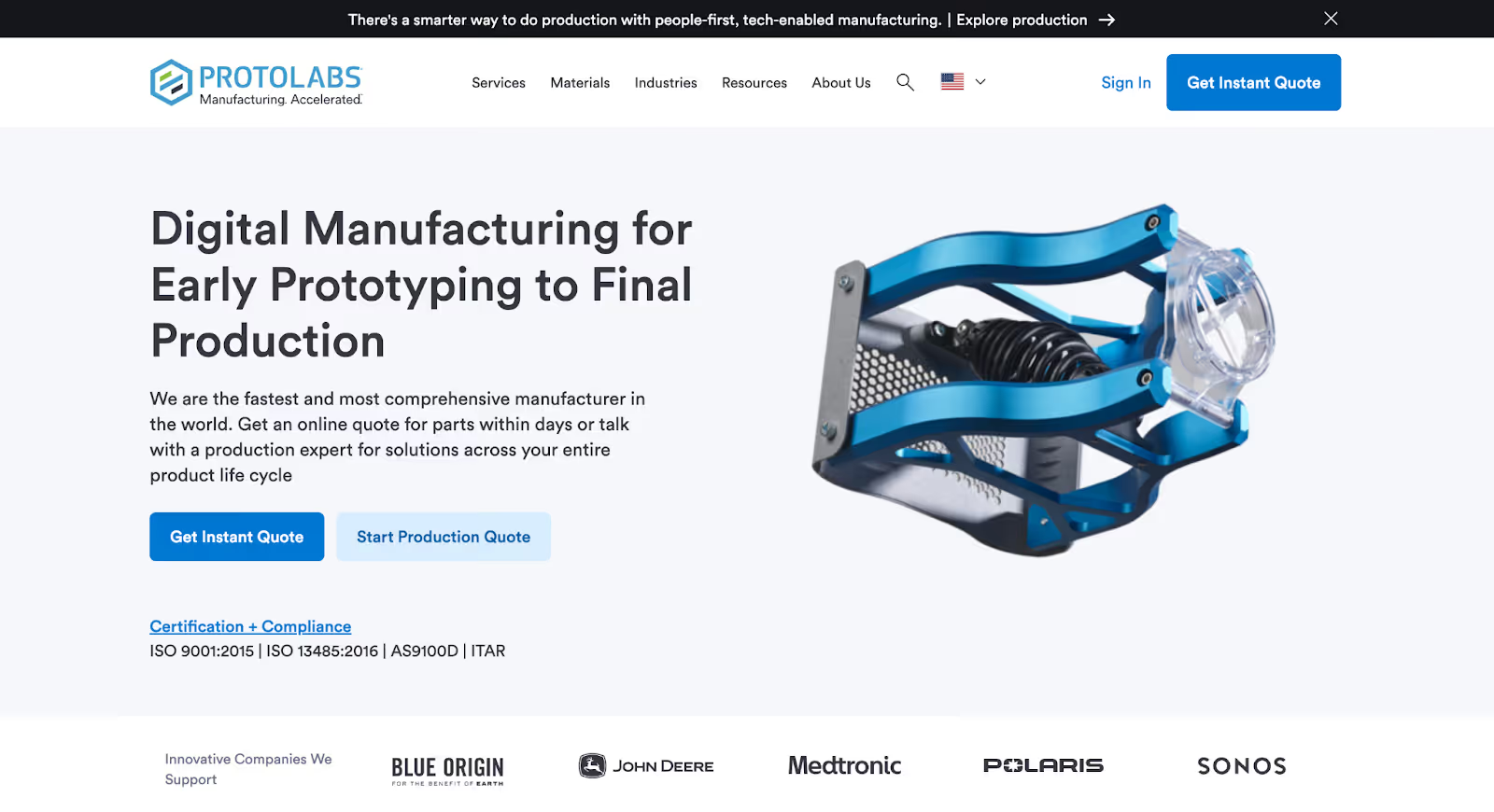
1. Protolabs
Protolabs is a digital manufacturing company specializing in rapid prototyping and on-demand production, including CNC machining, injection molding, sheet metal fabrication, and 3D printing. Its platform serves engineers and product teams who need fast turnaround and transparent manufacturing processes.
Why it works:
Speed is communicated immediately and repeatedly From the first screen, Protolabs positions itself around fast production and quick quoting. This isn’t buried in technical specs, it’s the core message. For engineers working under deadlines, that clarity instantly differentiates the company from traditional manufacturers.
The quoting experience is integrated into the brand promise Instead of treating quoting as a contact form, Protolabs makes it part of the product experience. The digital upload-and-quote system reinforces their positioning as a modern, tech-enabled manufacturer. The interface itself becomes proof of capability.
Complex services are broken into structured, digestible paths Manufacturing methods are clearly segmented, each with its own detailed page explaining materials, tolerances, lead times, and applications. Engineers can self-educate without feeling overwhelmed. The structure respects technical depth while maintaining usability.
Visual design supports credibility, not decoration The design is clean, technical, and precise. High-quality part imagery and production visuals reinforce capability without relying on generic industrial stock photography. The tone feels engineered, not marketed.
Takeaway:
Protolabs’ website works because it aligns structure with urgency. It understands that manufacturing buyers often prioritize speed, precision, and clarity over brand storytelling. By turning its digital quoting system into a core part of the experience, the site positions the company as a technology-enabled manufacturing partner, not just a supplier.
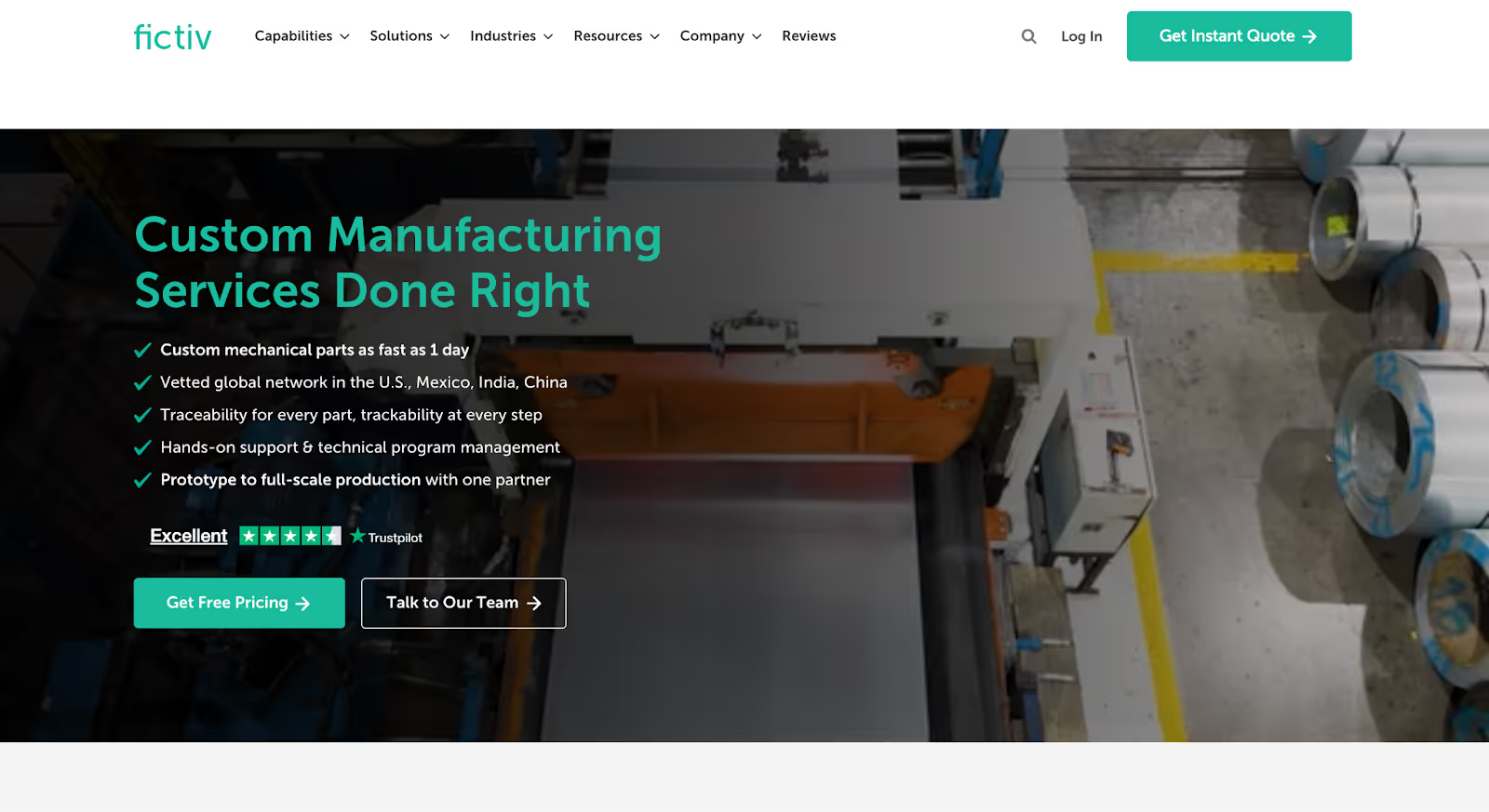
2. Fictiv
Fictiv is a global manufacturing platform that connects companies with vetted production partners for custom mechanical parts. It focuses on simplifying sourcing, quality control, and supply chain management for hardware teams.
Why it works:
Manufacturing is framed as a supply chain solution, not just production Instead of presenting itself as a factory, Fictiv positions the company as an end-to-end manufacturing partner. The messaging speaks directly to pain points like delays, quality inconsistencies, and global coordination. This shifts the conversation from “who can make this part?” to “who can manage this reliably?”
The platform model is clearly explained Marketplace-based manufacturing can feel abstract. Fictiv avoids confusion by clearly outlining how its network works, how suppliers are vetted, and how quality is controlled. This transparency reduces hesitation for companies unfamiliar with distributed manufacturing models.
Risk reduction is visible throughout the site Quality assurance processes, inspection standards, and case studies are easy to find. Instead of generic trust claims, the site explains how problems are prevented and managed. For procurement teams, this operational clarity builds confidence.
The design balances modern tech with industrial credibility The website feels more like a SaaS platform than a traditional manufacturer, which reinforces its positioning as a tech-enabled solution. Clean layouts, structured service pages, and consistent visual language make complex supply chain processes feel organized.
Takeaway:
Fictiv’s website works because it reframes manufacturing around predictability and control. By clearly explaining its network model and emphasizing quality oversight, the site addresses the biggest fear in outsourced production: uncertainty.
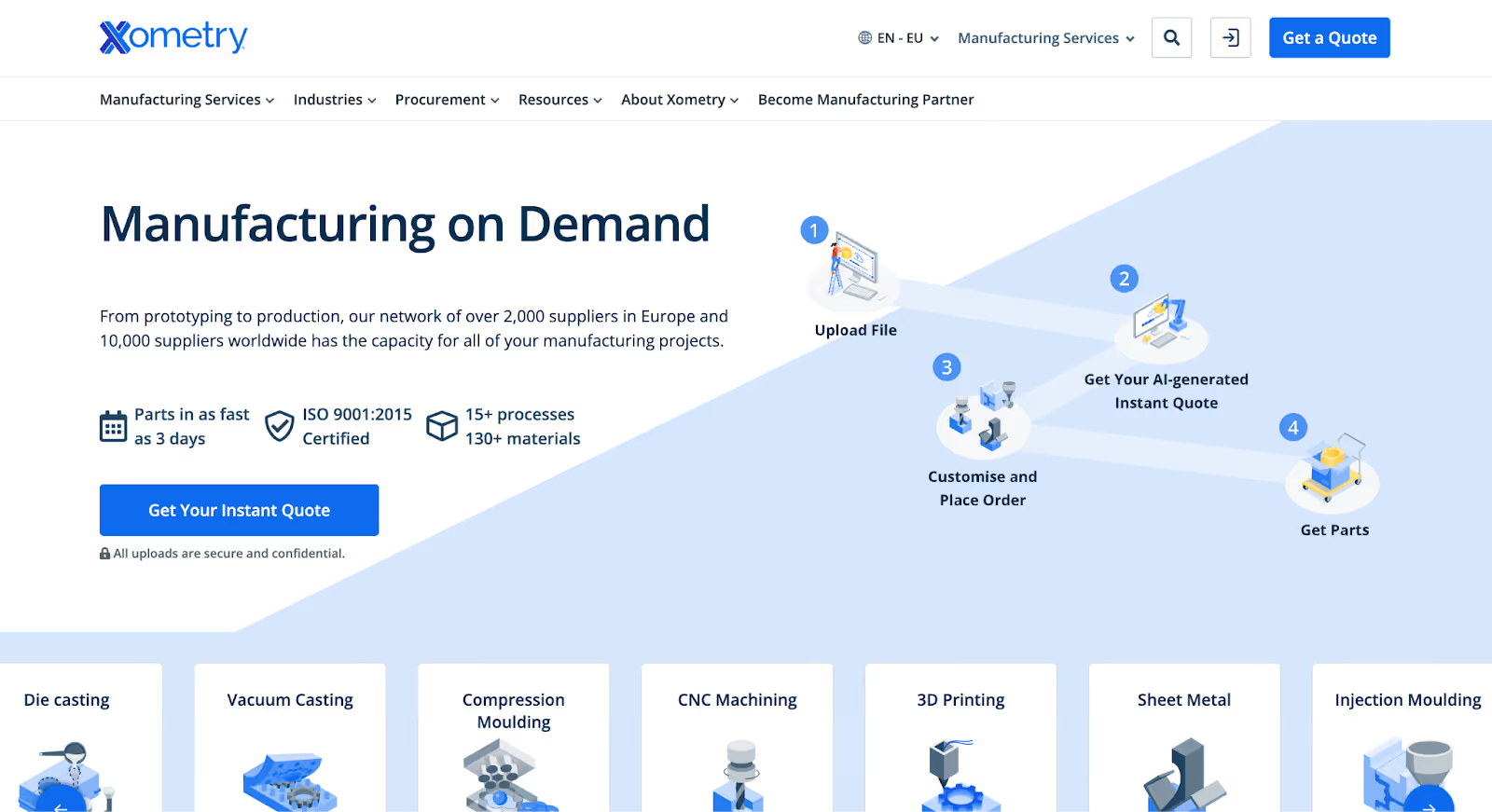
3. Xometry
Xometry is an AI-powered manufacturing marketplace that provides custom parts through a global network of vetted suppliers. It serves engineers, procurement teams, and enterprises looking for scalable, on-demand production across multiple manufacturing processes.
Why it works:
The value proposition is immediate and transactional Xometry leads with what buyers care about most: instant quoting and competitive pricing. The ability to upload a design file and receive fast pricing isn’t secondary, it’s central. This reduces friction and positions the platform as action-oriented rather than informational.
Scale is communicated through breadth of capabilities From CNC machining and injection molding to sheet metal and finishing services, Xometry clearly outlines its manufacturing depth. The structured breakdown of processes helps users quickly confirm whether their specific need is supported.
Enterprise credibility is embedded throughout The site highlights enterprise partnerships, certifications, and production standards without overwhelming the visitor. Logos, quality standards, and supplier vetting processes reinforce that this is not a loose marketplace, it’s a controlled manufacturing network.
AI is positioned as operational efficiency, not hype Rather than using AI as a buzzword, Xometry ties it directly to quoting accuracy, supplier matching, and cost optimization. The technology feels practical and integrated into the production workflow.
Takeaway:
Xometry’s website works because it reduces the traditional friction of sourcing custom parts. By combining instant quoting, broad capability coverage, and enterprise-level credibility, the platform turns complex procurement into a streamlined digital experience.
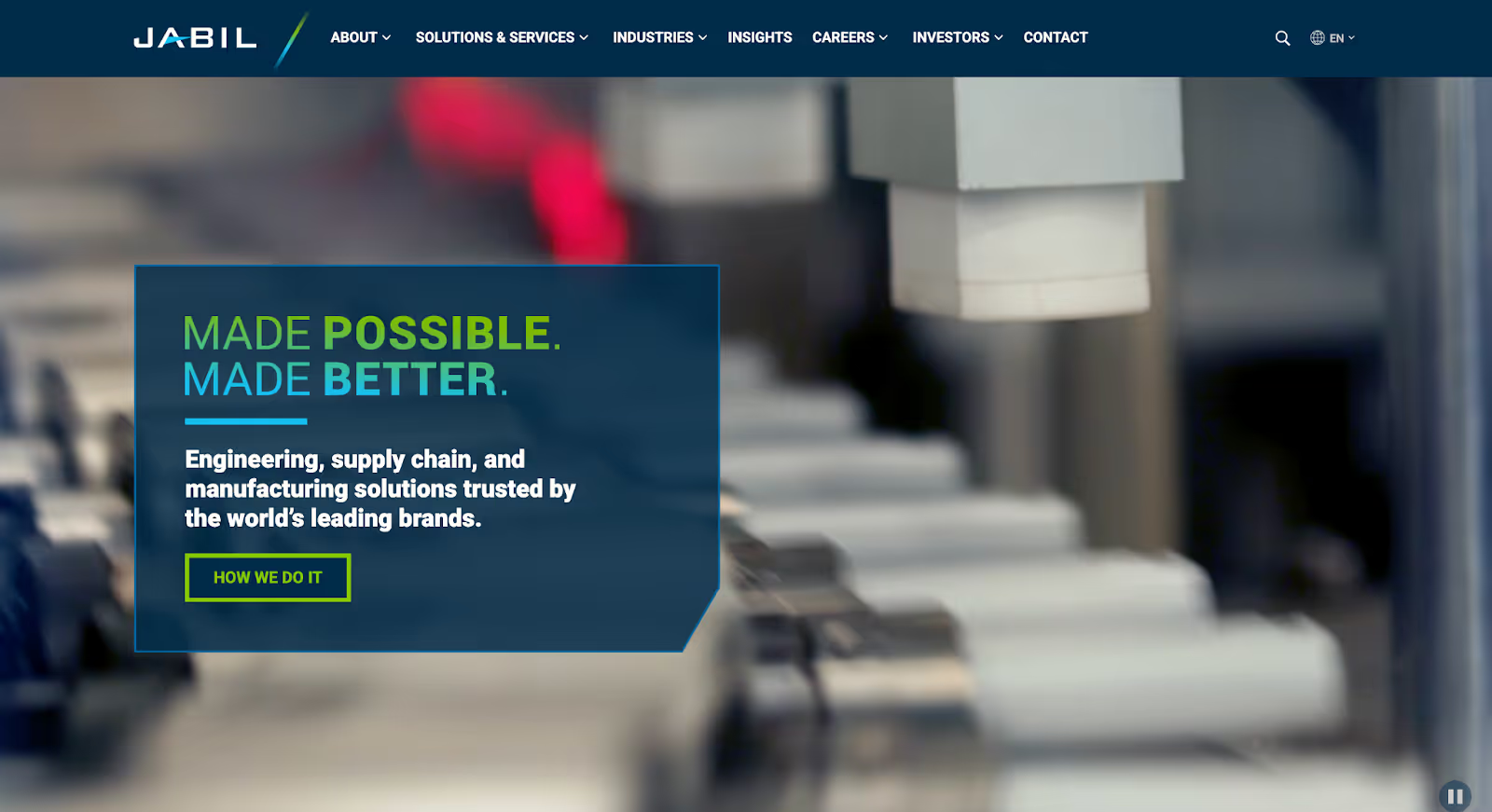
4. Jabil
Jabil is a global manufacturing services company that provides engineering, design, and supply chain solutions across industries including healthcare, automotive, packaging, and consumer electronics. It operates at enterprise scale, supporting some of the world’s largest brands.
Why it works:
The website positions Jabil as an innovation partner, not just a contract manufacturer Rather than leading with factories or production lines, Jabil emphasizes engineering, product development, and end-to-end solutions. This reframes the company from a behind-the-scenes supplier to a strategic manufacturing partner.
Industry pathways simplify enterprise complexity With operations spanning multiple sectors, the risk is overwhelming users. Jabil avoids this by clearly segmenting content by industry, allowing visitors to explore relevant case studies, capabilities, and insights without navigating a maze of services.
Thought leadership reinforces credibility The site integrates reports, insights, and research prominently. Instead of relying solely on capability claims, Jabil demonstrates expertise through published perspectives and industry analysis. Depth becomes proof.
Scale is communicated visually and structurally Global footprint, sustainability initiatives, advanced facilities, and technological investments are woven into the experience. The design feels corporate and structured, aligning with its enterprise audience without becoming cold or impersonal.
Takeaway:
Jabil’s website works because it elevates manufacturing into strategic collaboration. By organizing vast capabilities around industries and innovation, it reassures enterprise buyers that they’re partnering with an engineering-led organization, not simply outsourcing production.
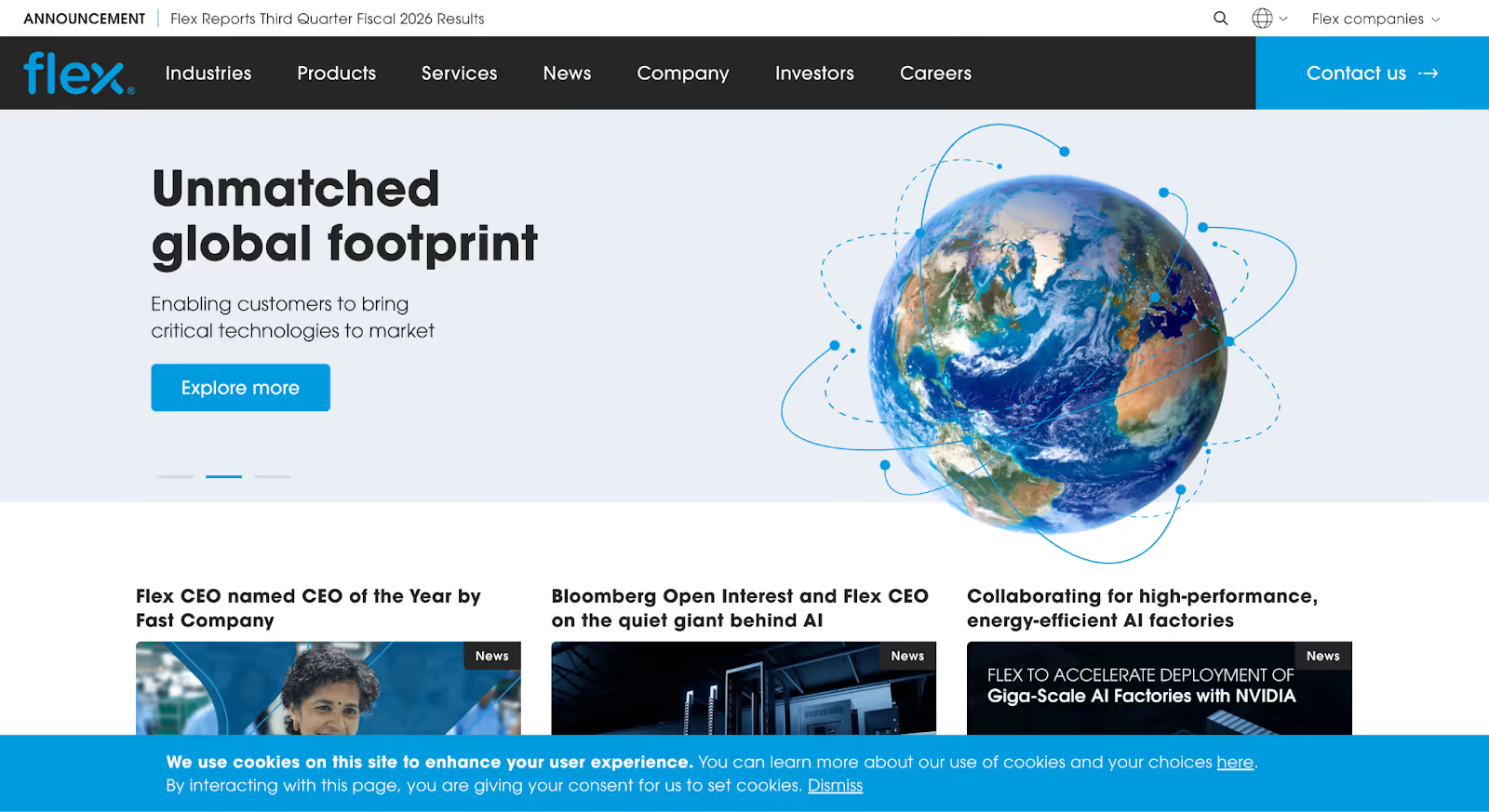
5. Flex
Flex is a global advanced manufacturing partner providing design, engineering, supply chain, and production solutions across industries such as healthcare, automotive, industrial, and communications. It operates at enterprise scale, supporting complex, high-volume manufacturing programs.
Why it works:
Manufacturing is framed around problem-solving, not production capacity
Flex does not lead with factory specs or equipment lists. Instead, it positions itself around solving complex engineering and supply chain challenges. This shifts the conversation from “how much can you produce?” to “what complexity can you handle?”
Industry segmentation creates clarity within scale With global operations and diverse capabilities, the site could easily feel overwhelming. Instead, Flex organizes its expertise by industry and solution area, allowing visitors to quickly find context-specific content without navigating unrelated services.
Innovation and sustainability are integrated, not isolated Sustainability initiatives, advanced technologies, and digital capabilities are embedded throughout the site rather than placed in standalone marketing sections. This reinforces that operational responsibility and innovation are part of how Flex manufactures, not just how it markets.
Enterprise credibility is supported by structure and tone The visual design is clean, restrained, and professional. Messaging is direct and confident without exaggeration. The structured layout reflects operational discipline, an important signal for enterprise procurement teams.
Takeaway:
Flex’s website works because it mirrors the sophistication of its operations. By framing manufacturing as integrated engineering and supply chain expertise, the site appeals to enterprise buyers seeking reliability at scale, not just production capacity.
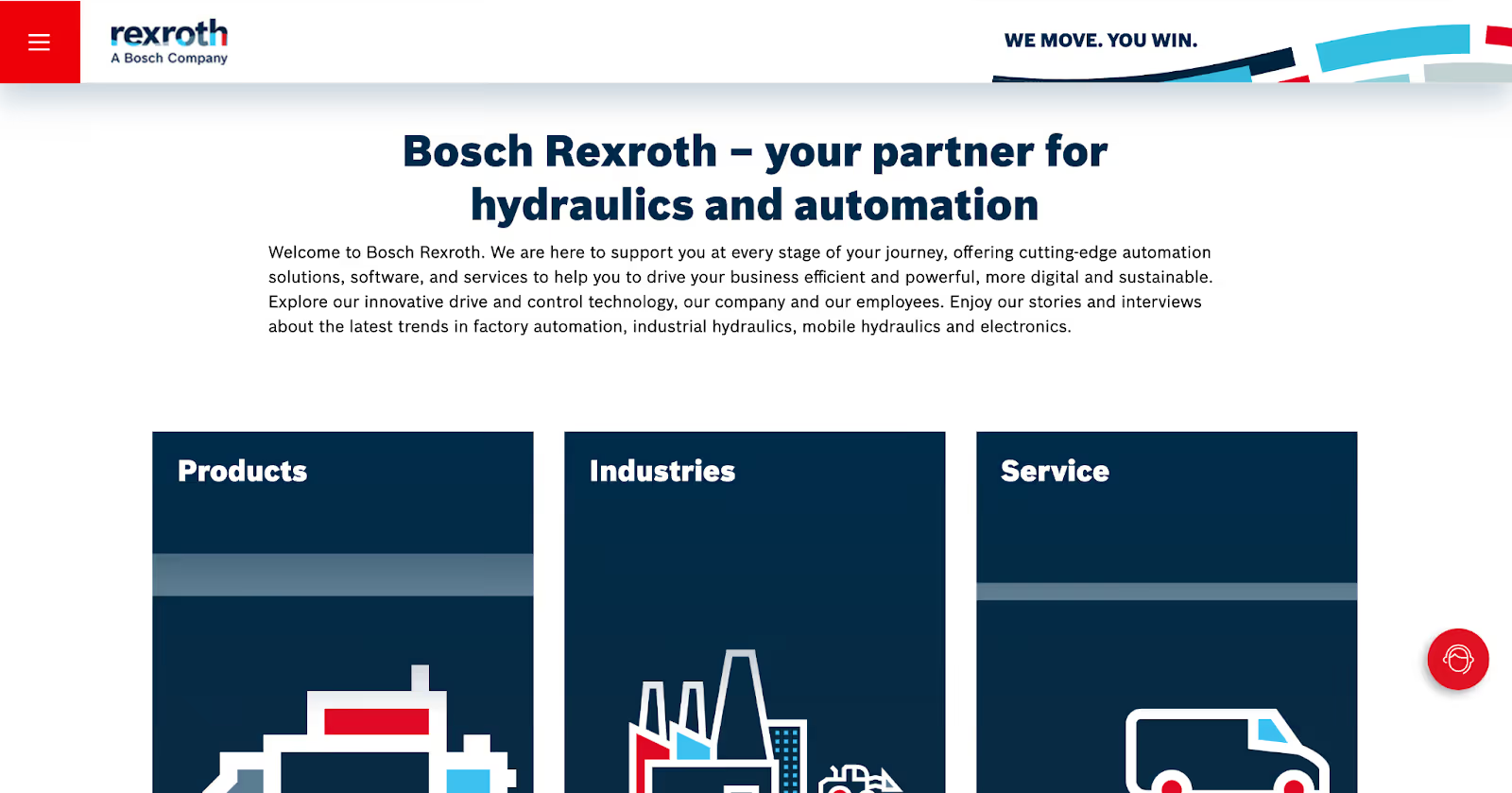
6. Bosch Rexroth
Bosch Rexroth is a global manufacturer of drive and control technologies used in industrial automation, hydraulics, and motion systems. It serves complex industrial environments where precision, reliability, and integration matter.
Why it works:
Technical depth is organized around solutions, not just products Instead of presenting an overwhelming product catalog upfront, Bosch Rexroth structures its website around applications and system-level solutions. This helps engineers and decision-makers understand how components work together in real-world scenarios.
Product complexity is supported by clear documentation paths Datasheets, technical specifications, and configuration tools are easy to access. The site respects the fact that industrial buyers often need detailed information but it delivers that depth in a structured, navigable way.
Global scale is balanced with practical usability With a large portfolio and international presence, the risk is information overload. The navigation is segmented logically, and search functionality is prominent, helping users quickly locate specific technologies or support resources.
Brand credibility is reinforced through engineering clarity The tone is technical but precise. Visuals show real industrial environments, components in use, and application contexts. The messaging feels engineered, not overly promotional which aligns with its audience.
Takeaway:
Bosch Rexroth’s website works because it respects industrial complexity without letting it overwhelm the user. By organizing products around solutions and maintaining structured access to technical documentation, the site supports both early research and detailed evaluation stages.
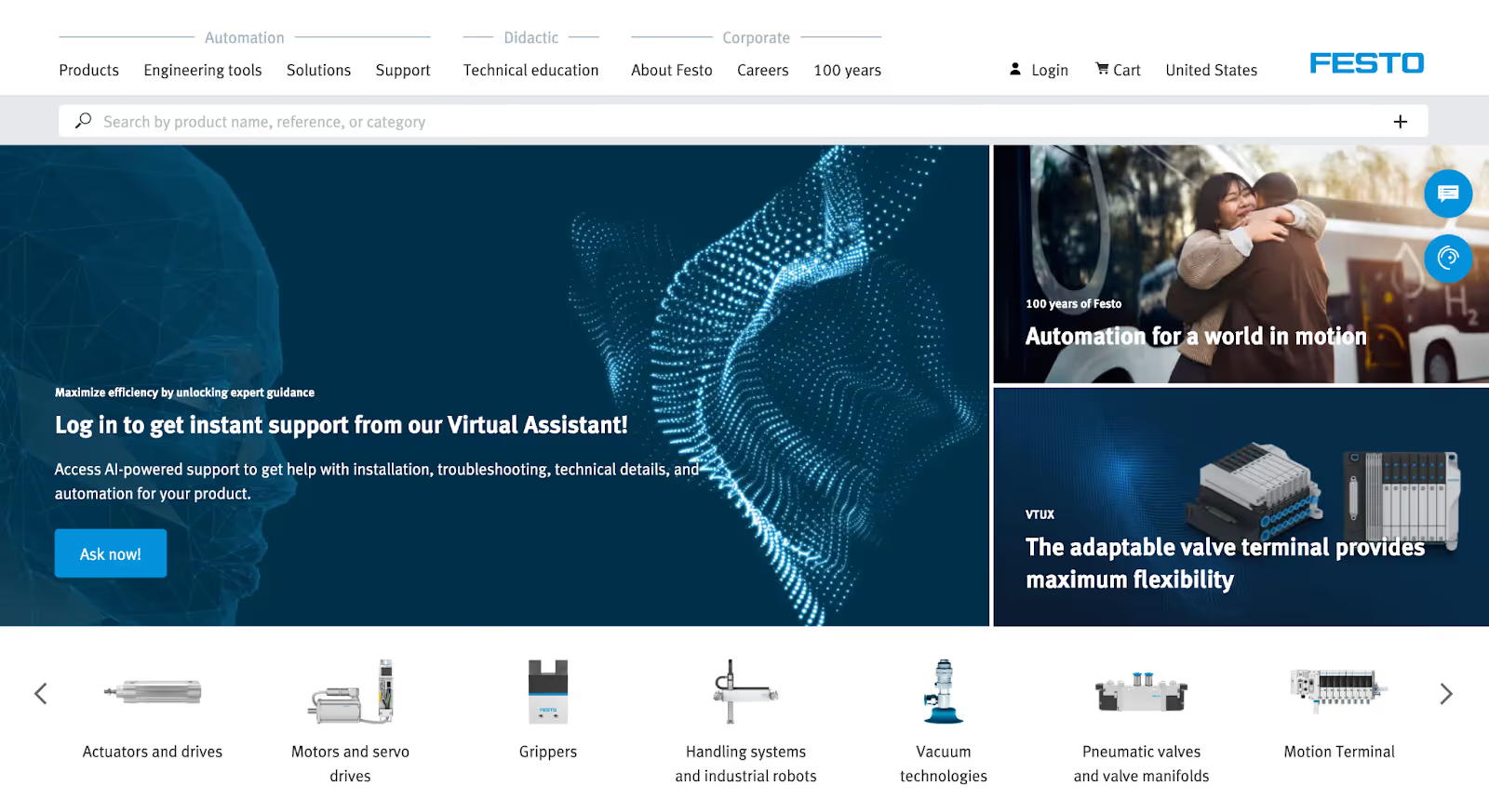
7. Festo
Festo is a global manufacturer of automation technology and pneumatic systems used in industrial production environments. It serves manufacturers looking to optimize motion control, efficiency, and system performance.
Why it works:
Automation is positioned as performance improvement, not just components Festo doesn’t frame itself as a parts supplier. The messaging focuses on productivity, efficiency, and intelligent automation. This shifts the conversation from individual products to measurable operational outcomes.
Education is integrated into the buying journey Industrial automation can be technically dense. Festo supports visitors with structured learning resources, application examples, and training programs. This positions the company as both a manufacturer and a knowledge partner.
Product architecture is highly structured The site contains an extensive catalog, yet navigation remains logical and segmented. Visitors can explore by product type, industry, or application, making it easier to filter complexity based on their needs.
Innovation is demonstrated through real-world applications Instead of abstract claims about smart factories, the site shows how technologies are implemented across industries. Case examples and system demonstrations make automation tangible.
Takeaway:
Festo’s website works because it balances technical depth with educational support. By positioning automation as performance-driven and structuring its extensive product range clearly, the site helps industrial buyers move from exploration to specification with confidence.
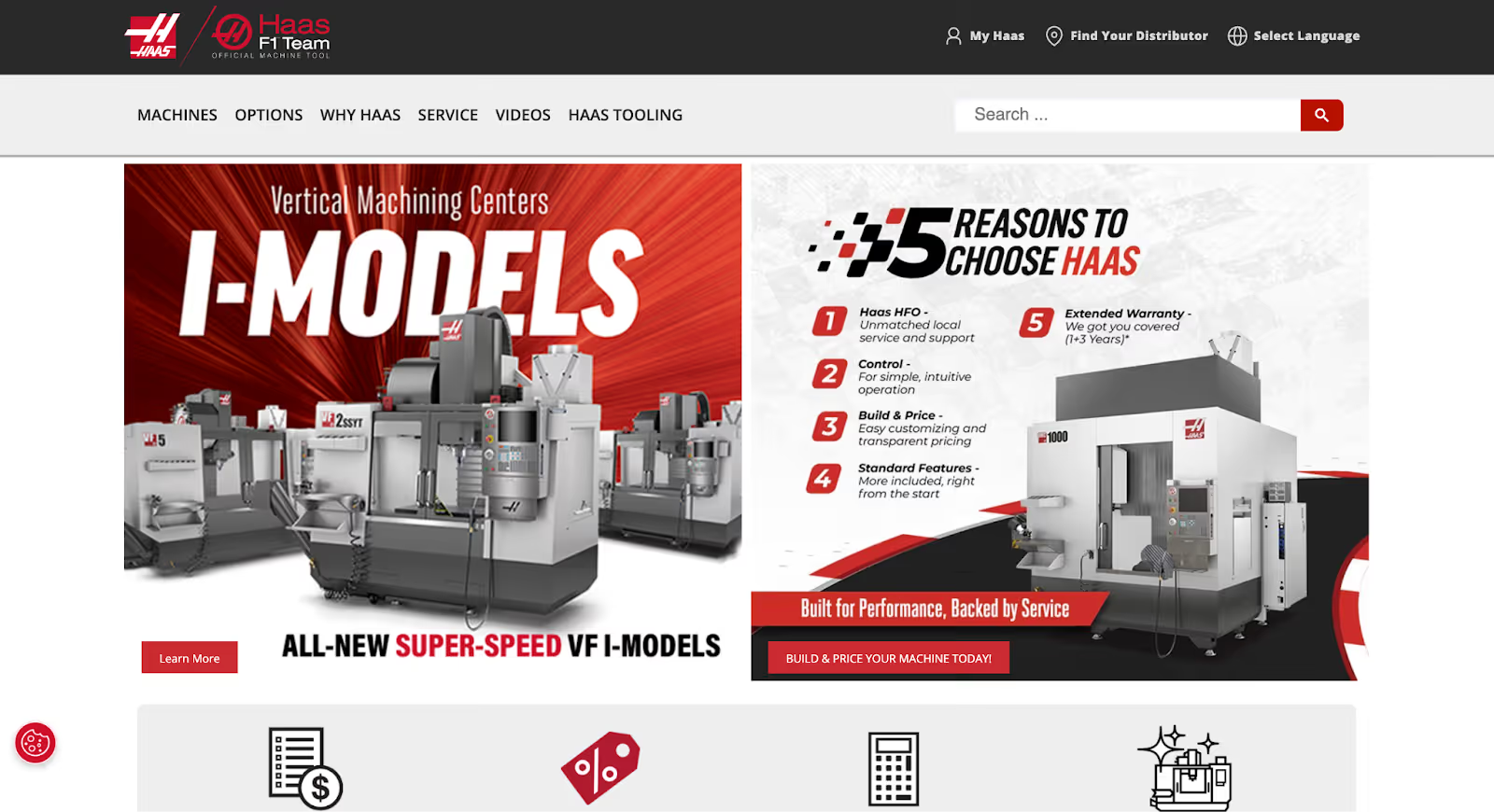
8. Haas Automation
Haas Automation is a leading manufacturer of CNC machine tools, serving machine shops, manufacturers, and technical training institutions worldwide. Its focus is on precision machining equipment built for reliability and accessibility.
Why it works:
Products are the hero and that’s intentional Unlike broader manufacturing service providers, Haas leads directly with its machines. The homepage and navigation prioritize product categories, allowing buyers to quickly explore specific CNC models without friction.
Detailed product pages support serious evaluation Each machine has a structured page with specifications, features, videos, and configuration options. Technical buyers can access the depth they need without navigating through marketing-heavy storytelling.
Practical credibility replaces abstract positioning Instead of bold innovation claims, Haas emphasizes reliability, value, and real-world usability. The tone aligns with machine shop owners and operators who prioritize performance over branding language.
Support and training are clearly integrated Service, parts, operator training, and technical documentation are easy to access. This reassures buyers that ownership extends beyond the initial purchase.
Takeaway:
Haas Automation’s website works because it understands its audience. By prioritizing product clarity, technical depth, and practical support, the site mirrors how machine tool buyers actually evaluate equipment, methodically and specification-first.
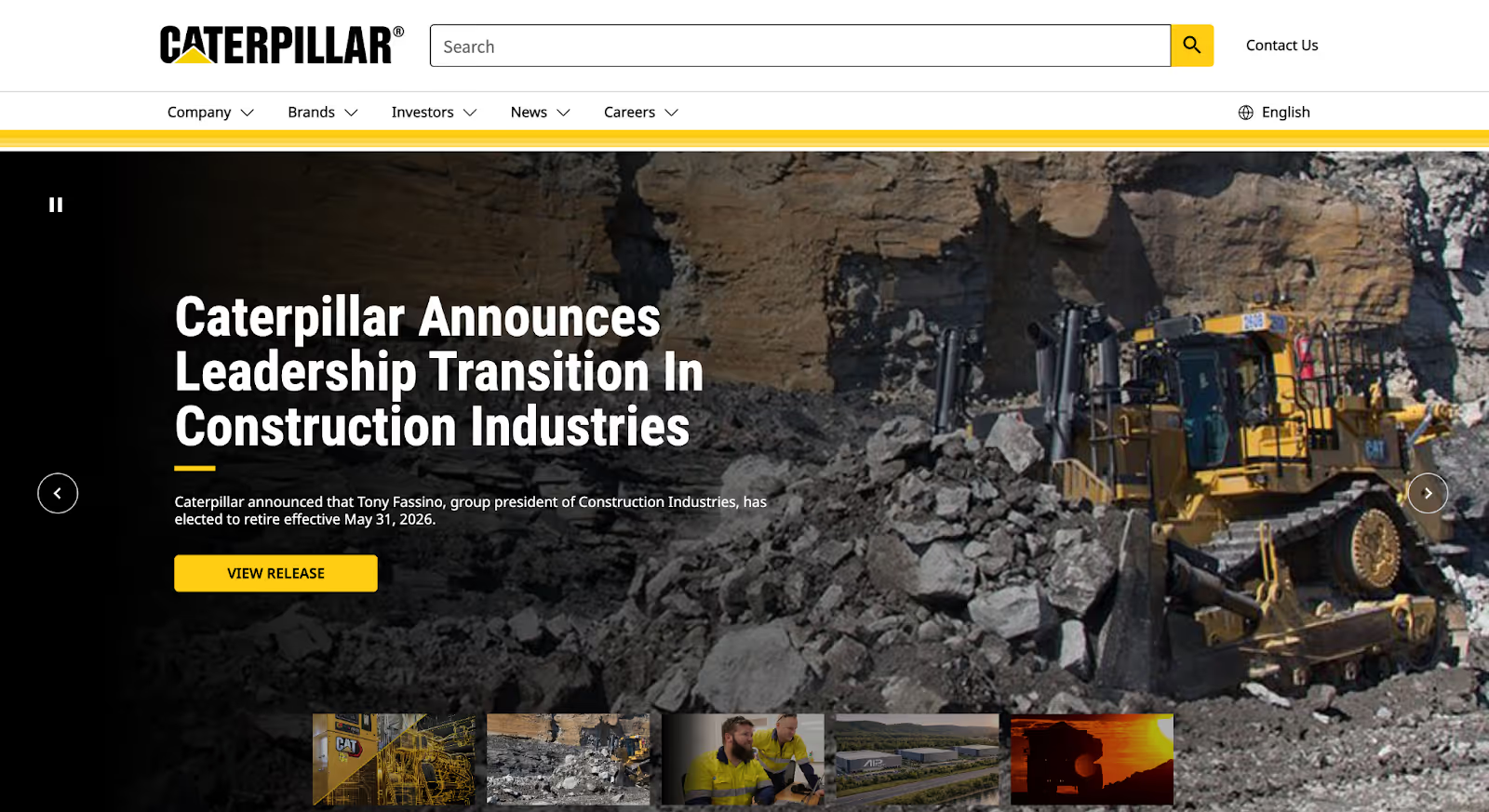
9. Caterpillar
Caterpillar is a global manufacturer of construction and mining equipment, engines, and industrial turbines. Its brand is deeply associated with heavy machinery, durability, and large-scale industrial operations.
Why it works:
Brand authority is immediate and unmistakable Caterpillar doesn’t need to explain who it is but the website still reinforces scale and reliability through strong imagery, bold product visuals, and confident messaging. The experience reflects operational strength from the first screen.
Product discovery is structured around use cases Heavy equipment buyers often search by job type or industry rather than model numbers. The site supports this by organizing products around applications, industries, and equipment categories, helping visitors quickly narrow options.
Dealer and support infrastructure are highly visible Manufacturing at this scale depends on service networks. Caterpillar integrates dealer locators, parts support, and maintenance resources prominently, reinforcing long-term ownership value.
Performance and sustainability are tied to real-world impact Rather than abstract sustainability claims, the website shows how equipment improves efficiency, reduces emissions, and supports infrastructure projects globally. The messaging connects machinery to tangible outcomes.
Takeaway:
Caterpillar’s website works because it aligns brand power with usability. By structuring product discovery around real-world applications and clearly emphasizing service infrastructure, the site supports both large-scale buyers and equipment operators evaluating long-term investment.
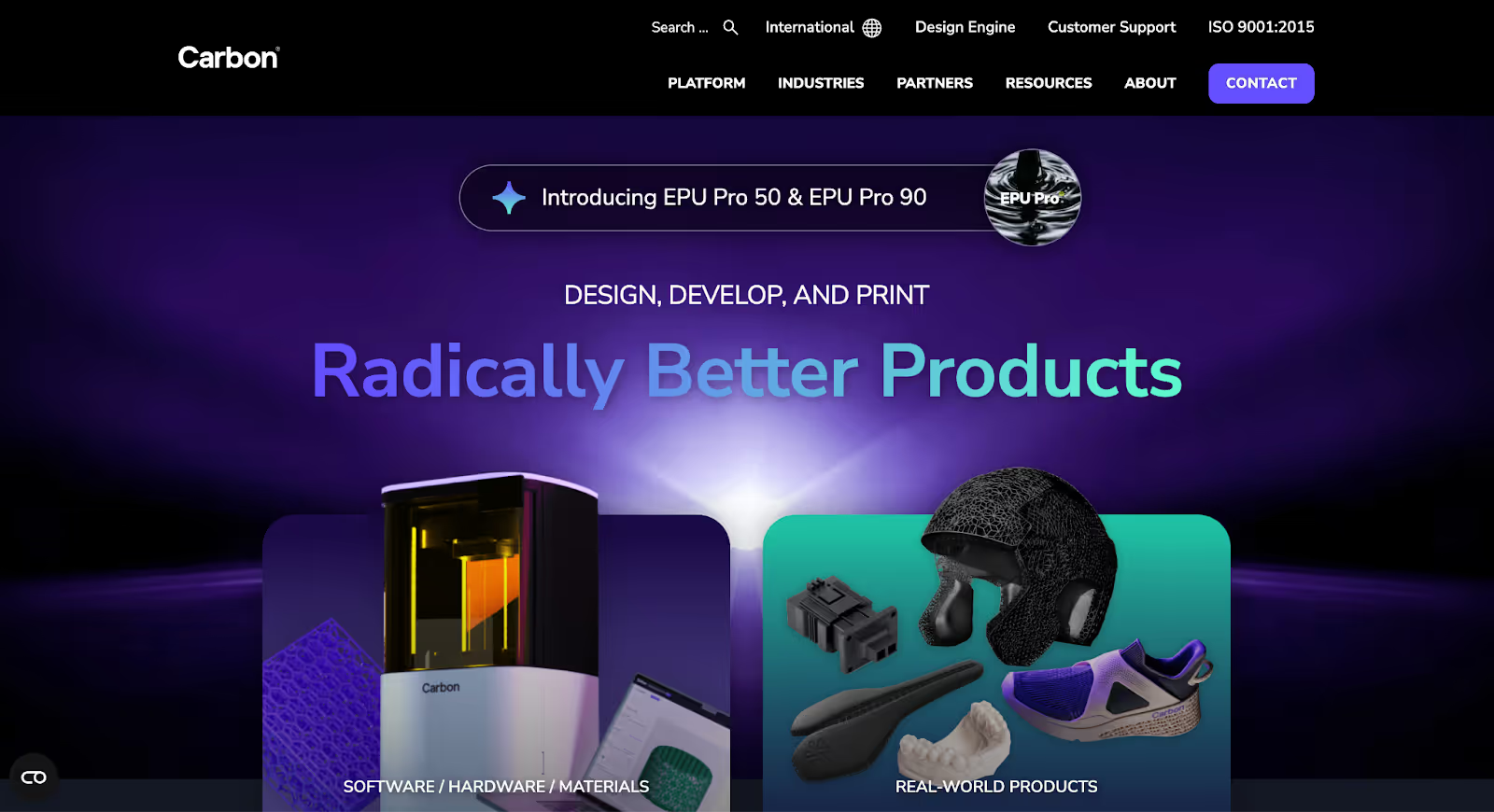
10. Carbon
Carbon is an advanced manufacturing company specializing in digital light synthesis (DLS) 3D printing technology. It partners with brands and manufacturers to produce high-performance end-use parts at scale.
Why it works:
Technology is positioned through outcomes, not mechanics Instead of leading with technical jargon, Carbon frames its technology around what it enables faster: iteration, stronger materials, scalable production. The benefits come before the process details, making the innovation accessible.
Manufacturing is shown in real product context The site highlights recognizable applications and end-use products, demonstrating that this isn’t just prototyping, it’s production-ready manufacturing. This shifts perception from experimental to industrial-grade.
Depth is layered intelligently For technical visitors, detailed material specifications, process explanations, and case studies are easy to access. But the main user journey stays focused and uncluttered, preventing overwhelm.
Design reinforces modernity and precision The visual experience feels advanced and clean, aligning with the company’s positioning as a next-generation manufacturing technology provider. The layout supports credibility without feeling corporate-heavy.
Takeaway:
Carbon’s website works because it makes advanced manufacturing feel practical. By leading with tangible results and supporting them with structured technical depth, the site bridges innovation and industrial trust effectively.
Best Manufacturing Website Design Trends in 2026
Manufacturing websites are no longer digital brochures.
In 2026, they’re credibility platforms.
The strongest industrial brands aren’t redesigning to look “modern.” They’re redesigning to clarify positioning, reduce risk, and support technical buyers who evaluate suppliers online before ever requesting a quote.
Here are the manufacturing website design trends shaping the space this year and why they matter.
1. Capability-First Messaging
Manufacturers are moving away from generic headlines like “Engineering Excellence” and toward clear, capability-led positioning.
Instead of abstract claims, homepages now lead with:
Modern manufacturing websites don’t hide specifications, but they don’t overload the first screen either.
We’re seeing:
Expandable technical sections
Downloadable spec sheets
Clear segmentation by process or material
Layered information architecture
The goal: let engineers go deep without confusing first-time visitors.
3. Visual Proof of Facilities and Operations
Stock imagery is fading.
Instead, strong manufacturing sites showcase:
Real production environments
Machinery in action
Assembly lines
Close-up product photography
Buyers want to see operational maturity. Real visuals build more trust than polished marketing renders.
4. Industry-Specific Navigation Paths
Rather than forcing users to decode internal service categories, websites now organize content by:
Industry
Application
Problem solved
This aligns with how procurement and engineering teams think when searching for partners.
5. Integrated RFQ and Quoting Experiences
Manufacturers are upgrading from static contact forms to:
File upload systems
Instant quoting tools
Structured RFQ workflows
Clear lead time indicators
This trend reflects digital expectations shaped by SaaS and e-commerce.
6. Sustainability and Compliance Transparency
Environmental standards, certifications, and ethical sourcing are no longer buried.
Modern sites prominently highlight:
ISO certifications
ESG initiatives
Compliance documentation
Supply chain transparency
For enterprise buyers, these are decision-making factors, not marketing add-ons.
7. Cleaner, More Minimal Design Systems
Industrial websites are shedding clutter.
Common updates include:
More white space
Strong typography
Simplified navigation menus
Reduced visual noise
The result feels more structured and controlled, qualities that mirror precision manufacturing itself.
Manufacturing websites in 2026 aren’t trying to look flashy. They’re trying to look competent.
And in industrial markets, competence converts better than creativity.
Final Thoughts
In manufacturing, credibility determines opportunity.
By the time a buyer contacts you, they have already compared capabilities, certifications, industries served, and production depth. Your website is often the first filter in that process.
Many manufacturing websites still function like static brochures. They describe equipment, list services, and outline company history, but they do not clearly communicate positioning, specialization, or risk reduction. For engineers and procurement teams, that creates hesitation.
The strongest manufacturing websites in 2026 act as qualification tools. They clarify industries served. They surface certifications and facilities early. They structure complex capabilities into digestible pathways. And they make requesting a quote simple and friction-aware.
If your website is not generating qualified inquiries, the issue is rarely just aesthetics. It is structural clarity. Sharper positioning. Clearer industry pathways. Visible proof. A quoting process that reflects operational maturity.
Because in manufacturing, your website is not marketing decoration. It is part of your sales infrastructure.
Build a manufacturing website that earns trust before the first call
The companies featured in this list succeed because they make evaluation easier. Buyers can quickly understand capabilities, technical depth, and fit. That confidence shortens sales cycles and improves lead quality.
If your current site feels outdated, overly generic, or difficult to navigate for engineers and procurement teams, it may be time to rethink its structure.
Explore how we approach manufacturing website design and build sites that function as credibility and qualification engines, not brochures.
Get your Webflow SEO Google sheet checklist
Short description on the benefits or value you’ll get from using this checklist
Organizes SEO tasks for efficiency
Simplifies keyword tracking and management
Ensures consistent on-page optimization efforts
Thank you! Your submission has been received!
Oops! Something went wrong while submitting the form.
Frequently Asked questions
What makes a manufacturing website effective in 2026?
How is a manufacturing website different from other B2B websites?
Should manufacturing websites prioritize design or technical content?
What information should always be visible on a manufacturing homepage?
How can a manufacturing website reduce buyer uncertainty?
Do manufacturing companies need instant quoting tools?
How often should a manufacturing website be redesigned?
About the Author
Rajat Kapoor
Copywriter, marketer, and Webflow developer. Rajat focuses on crafting clear, SEO-focused copy for scaling B2B brands.
CRO is the practice of increasing the share of visitors who take a key action. Here is how conversion rate optimization works for B2B websites in Webflow.
See what Webflow agencies cost in 2026, with real pricing from 12 firms, typical B2B project ranges, what each tier includes, and how to compare proposals.
See what Webflow MCP and Claude can actually do for marketing teams, from CMS updates and SEO audits to content workflows, approvals, and practical automation.
Rajat Kapoor
10
min
Our Portfolio
Explore Our Resource Collections
Amply Academy
Learn Web design, webflow, and web design best practices, all tailored to help you grow your B2B business

%20and%20What%20Makes%20Them%20Work.avif)


.avif)



.avif)