

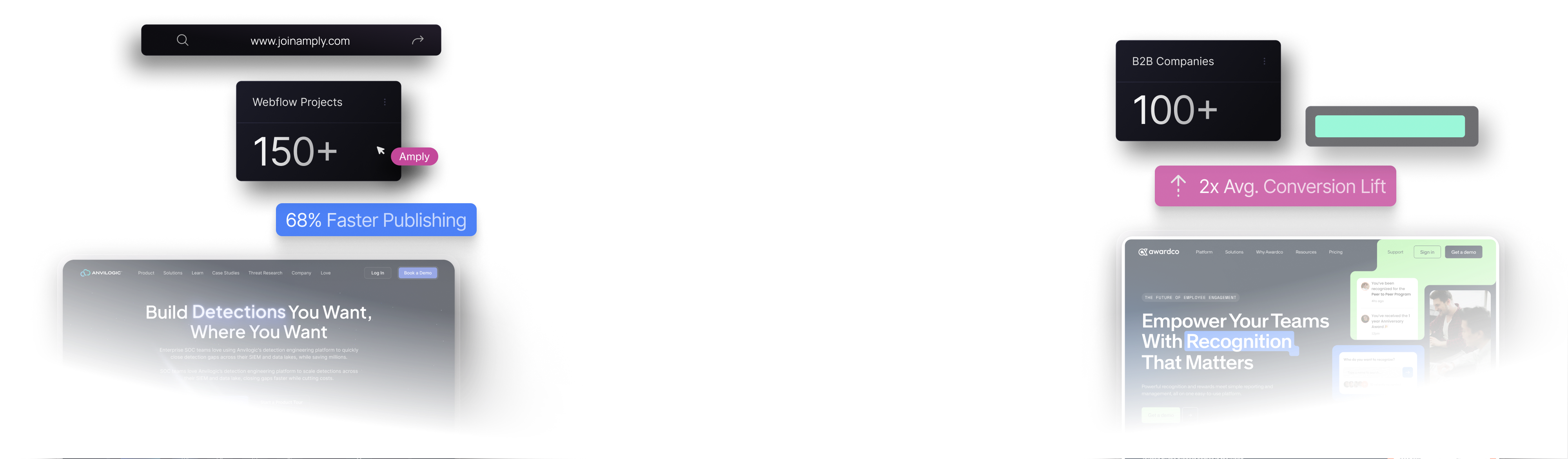


Webflow Enterprise Partner

5.0 Star Rated
A Webflow Agency for Fast-Moving B2B Teams
High-converting, scalable Webflow websites built for marketing teams that move fast. We handle the strategy, design, and development —you get a site your team can actually run with.









We get it
Your site isn't keeping up
Most B2B marketing teams are stuck with a website that's slow to update, hard to scale, and not pulling its weight on pipeline. We hear this every single week:

New landing page? Two weeks and a dev ticket. Campaign pages get delayed. Opportunities slip.

You're investing in paid and SEO but your site isn't converting. Something's broken between the click and the demo request.

You know it needs to happen. But the last agency took six months and delivered something nobody could edit.

WordPress plugin chaos. HubSpot template limitations. A custom build nobody understands. You need out.


What we do
A true full-service Webflow Agency
Dev bottlenecks, slow launches, sites that don't convert, we fix all of it. Design, development, and optimization handled by a team that's done it 150+ times
Webflow Development
Performant, scalable builds with clean component architecture your team can work with long after launch.
CMS Migrations
Seamlessly move from WordPress, HubSpot, or custom platforms to Webflow while preserving structure and SEO value.
Branding & Identity
We build identities that aren't just seen — they're remembered. From messaging to visual language to web execution.
Webflow Enterprise
Multi-site architectures, localization, advanced security. Built on Webflow's enterprise tier by a certified partner.
Integrations
Connect Webflow to HubSpot, Salesforce, Marketo, Segment — imagine everything just works.
Website Design
Conversion-focused design for B2B — built around your buyer's journey, not just what looks good in a portfolio.

Retainers
A fast and reliable extension of your team. Ongoing design, development, optimization, and support — no re-hiring for every change.
Technical SEO & AEO
Metadata updates, schema, Core Web Vitals monitoring, sitemap management, and content structuring for AI search visibility.
Webflow Development
Performant, scalable builds with clean component architecture your team can work with long after launch.
CMS Migrations
Seamlessly move from WordPress, HubSpot, or custom platforms to Webflow while preserving structure and SEO value.
Branding & Identity
We build identities that aren't just seen — they're remembered. From messaging to visual language to web execution.
Webflow Enterprise
Multi-site architectures, localization, advanced security. Built on Webflow's enterprise tier by a certified partner.
Website Design
Conversion-focused design for B2B — built around your buyer's journey, not just what looks good in a portfolio.
Retainers
A fast and reliable extension of your team. Ongoing design, development, optimization, and support — no re-hiring for every change.
SEO & Performance
Seamlessly move from WordPress, HubSpot, or custom platforms to Webflow while preserving structure and SEO value.
Integrations
Connect Webflow to HubSpot, Salesforce, Marketo, Segment — imagine everything just works.
Listen from our clients
Client Videos


.avif)

.avif)

Case Studies
Driving impact for marketing teams
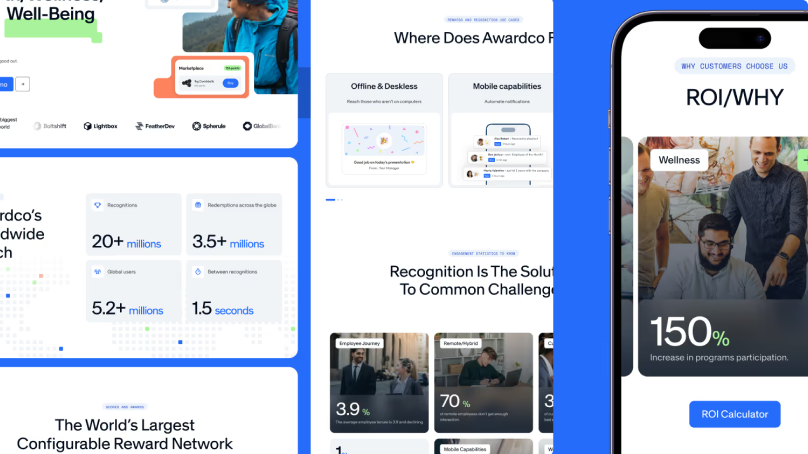
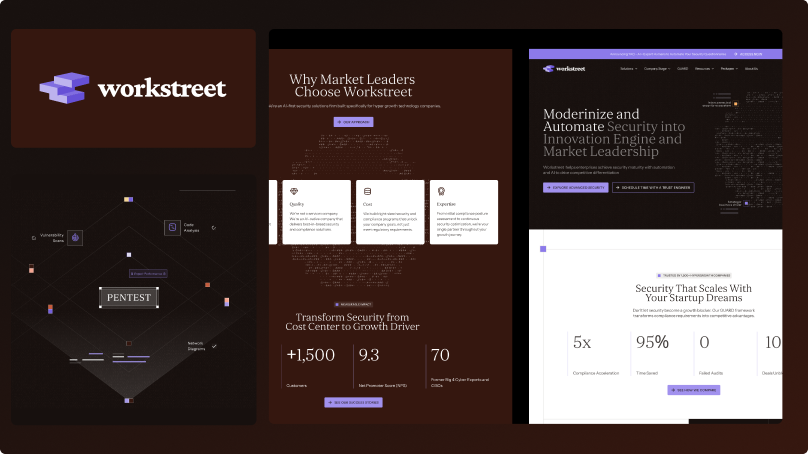
See how we've helped marketing teams launch faster, convert more, and take control of their websites


Testimonials
What our clients say





.svg)


.svg)


.avif)

The Amply Advantage
True B2B Webflow experts.
It's all we do.

One of a select group vetted by Webflow for complex, high-stakes builds. Direct access to Webflow's enterprise team and early platform features.

SaaS funnels, ABM landing pages, gated content, demand gen, we work with B2B marketing teams every day. That focus shows in the work.

We build component systems your marketing team can actually use. New pages, new campaigns, no dev tickets, no bottlenecks.

Most projects ship in 6-10 weeks. Sharp strategy, clean builds, on-time delivery, every time.

50+ sites moved from WordPress, HubSpot, and custom builds to Webflow. Zero traffic loss. Every redirect accounted for.

We offer retainer support, ongoing development, CRO, and optimization. A true extension of your team, not a one-time vendor.
Comparison
Amply vs other agencies
Not all agencies are built the same. Here's an honest look at how we stack up.
| Factor | Amply | Other Agencies |
|---|---|---|
| Webflow expertise | Enterprise-certified. 150+ Webflow-only projects. | Webflow is one of many platforms, not their specialty. |
| Marketing team control | Full visual editing. Your team publishes independently. | Need a developer for every content update. |
| B2B understanding | SaaS funnels, ABM, gated content, all baked in our expertise | Generic builds. No vertical expertise. |
| Delivery speed | 6-10 weeks. On-time delivery, every project. | 3-6 months. Scope creep is the norm. |
| After launch | Retainer support. Ongoing optimization. Growth partner. | Project ends at launch. |
| Conversion rates | 2x avg. conversion lift. CRO-driven builds. | Low conversions blamed on "not enough traffic." |
| SEO & performance | Built in from day one. 95+ Lighthouse scores standard. | SEO is an afterthought. |
Industry Leading Webflow Process
Here's exactly what happens and when.
We audit your current site, map the buyer journey, nail down conversion goals, and align on IA and messaging.
Messaging frameworks and page-by-page wireframes — approved by your team before we touch a pixel.
High-fidelity designs for key pages. We present, iterate, and finalize — with your feedback at every checkpoint.
Built directly in Webflow with a component-first approach. Reusable blocks, clean CMS, responsive everywhere.
Cross-browser testing, performance optimization, redirect mapping, schema markup, CMS training. Then we go live.
Post-launch support, A/B testing, new page builds. Your site keeps getting better.
Built for B2B.
Across every vertical.
B2B Focus
Webflow empowers SaaS companies to create flexible, high-performance websites that communicate their value propositions, drive conversions, and scale with business growth.

Fintech
Webflow enables Fintech companies to build secure, scalable websites that communicate complex solutions while ensuring data protection and compliance.

Healthcare
Webflow helps healthcare companies build secure, user-friendly websites that communicate services clearly and provide seamless, compliant patient experiences.

AI
Webflow enables AI companies to build innovative, scalable websites that clearly showcase their solutions while ensuring performance, security, and seamless user experiences.

VC
Webflow enables venture capital firms to create modern, scalable websites that showcase their port-cos and attract potential investments with clear, engaging content.

Cybersecurity
Webflow allows cybersecurity companies to build secure, high-performance websites that effectively communicate complex security solutions while ensuring trust, compliance, and seamless user experiences.

Manufacturing
Webflow helps B2B manufacturing companies build scalable, high-performance websites that showcase products, streamline lead generation, and provide seamless user experiences for buyers.

Startups
Webflow enables startups to create fast, scalable websites that effectively communicate their brand, engage visitors, and drive conversions as they grow.

Enterprise
Webflow enables enterprises to build secure, scalable websites that support seamless collaboration across teams, deliver a unified user experience, and meet complex business needs.
.avif)
Pricing
One-time projects or ongoing support
Pick the project type that works best for your business needs. No hidden fees.
Full redesigns, new builds, and platform migrations.
Starting at
- Strategy, design & Webflow development
- CMS architecture & component library
- SEO migration & redirect mapping
- Team training & documentation
- 60 days post-launch support
Dedicated Team


A fast and reliable extension of your team.
Starting at
/ month
- Dedicated Webflow developer hours
- New pages, landing pages & campaigns
- Performance monitoring & CRO
- A/B testing & optimization
- Priority Slack support
Dedicated Team
Pricing
We take the risk off your plate
On-time delivery, performance guarantees, full ownership, and post-launch support, built into every project.

On-Time Delivery
We hit every milestone or credit you. No scope creep surprises.
Performance Guarantee
New site doesn't outperform the old one in 90 days? We optimize for free.
You Own Everything
Code, designs, CMS — yours from day one. No lock-in. No hostage situations.

60-Day Support
Free post-launch bug fixes and adjustments. We don't disappear after go-live.
Why Webflow
Webflow vs the alternatives
An honest look at what each platform delivers for B2B marketing teams
| Webflow | Wordpress | Hubspot CMS | Custom Build | |
|---|---|---|---|---|
| Content Editing | Full visual control | Limited (plugins) | 8-16 weeks | Rarely |
| Design Flexibility | Unlimited | Theme-dependent | Constrained | Unlimited |
| Page Speed | 95+ Lighthouse Typical | Plugin bloat | Good | Depends |
| Ongoing Dev Costs | Minimal | High maintenance | Medium | Very High |
| Security & Hosting | Managed, AWS, SSL | Self-managed | Managed | Self-managed |
| Time To Launch | 6-10 Weeks (With Amply) | 8-16 weeks | 6-12 weeks | 3-6 Months |
Frequently Asked questions
Why should I choose Amply as my Webflow agency?
Can you migrate my existing website to Webflow?
Who would I be working with on my website project?
What does Webflow maintenance include?
Do you offer support after our SaaS website has launched?
How much does Webflow maintenance cost?
Do you also build enterprise websites?
How does Amply optimize Webflow sites for SEO and performance?
Is Webflow a good fit for large or complex B2B websites?
Can Amply integrate third-party tools and CRMs with Webflow?
How quickly do you turn around Webflow tasks?
What's the difference between a Webflow retainer and a one-off project?
Do I need to already be on Webflow to work with Amply?
Can I change or cancel my retainer plan?
.avif)
Let's build something that actually performs
Book a call with the Amply founders. We'll audit your current site, spot the quick wins, and show you exactly how we'd approach your project.


Amply founders